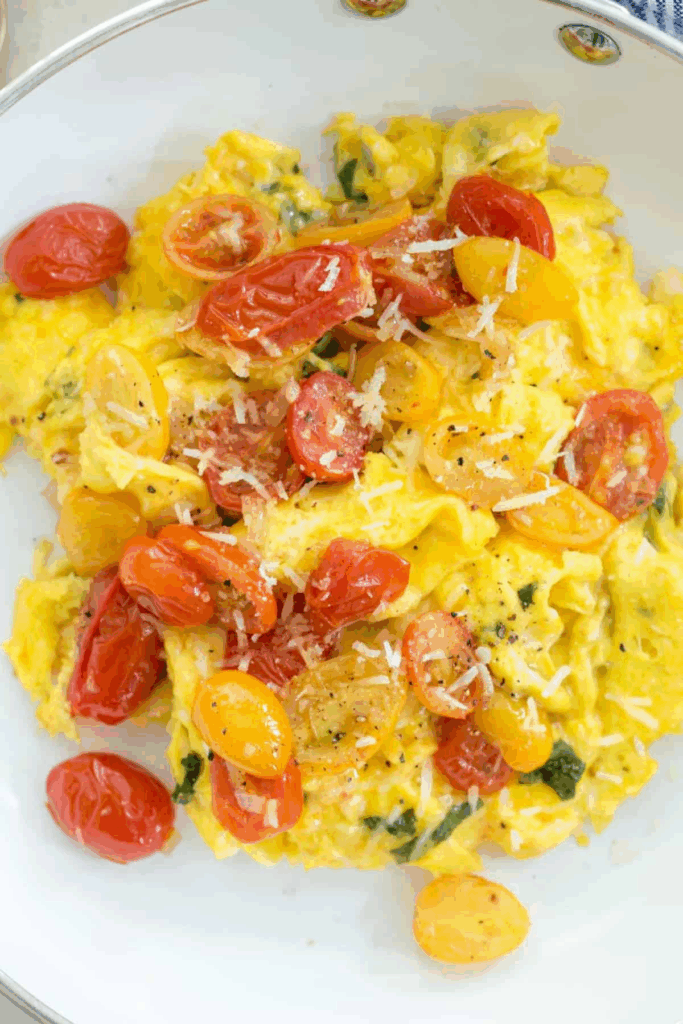
I’ll never forget the first time I had a truly great scrambled egg. I was about ten, sitting at my Nonna’s formica-topped kitchen table, my feet swinging miles from the floor. She placed a plate in front of me that looked… different. They weren’t the dry, rubbery yellow curds I was used to. These eggs were soft, almost like little clouds, studded with juicy bits of tomato and flecks of green. She called them “Uova Strapazzate.” I took one bite and my whole concept of breakfast flipped on its head. This recipe is that memory on a plate. It’s not just about eggs; it’s about patience, simplicity, and the magic that happens when you treat humble ingredients with a little respect.
Quick Look
| Prep | Cook | Total | Feeds | Level |
|---|---|---|---|---|
| 5 mins | 10 mins | 15 mins | 2 people | Easy |
Why You’ll Love This Recipe
- It’s a masterclass in texture. We’re going for soft, creamy curds, not bouncy rubber balls. It’s a game-changer.
- It tastes like summer. The sweet burst of tomato paired with the peppery fresh basil is pure sunshine, even in the dead of winter.
- It’s a 15-minute miracle. From fridge to plate in the time it takes to brew your coffee. Perfect for those mornings when you want something special without the fuss.
- It uses one bowl and one pan. My kind of cleanup.
Grab These
- 4 large, fresh eggs (the best you can afford, seriously. It matters.)
- 1 tablespoon whole milk or cream (a splash of cream makes them extra luxurious, but milk is fine!)
- 1 tablespoon unsalted butter (I’m a Cabot girl, through and through)
- 1/3 cup cherry or grape tomatoes, halved
- 2 tablespoons fresh basil, thinly sliced (chiffonade, if we’re being fancy. And please, for the love of all that is holy, do not use dried basil here.)
- Kosher salt and freshly cracked black pepper
- Optional: A pinch of red pepper flakes for a subtle kick.
Let’s Make It
Crack your eggs into a medium bowl. Add that splash of milk or cream, a good pinch of kosher salt, and a few grinds of black pepper. Now, here’s the first secret: don’t go crazy whisking. You just want to break up the yolks and whites until they’re just combined. A few streaks of white are totally fine. Over-whisking can make the eggs tough. I use a fork and about 15-20 swift strokes. Set that aside.
Grab a good non-stick skillet—this is one time where non-stick is non-negotiable for me—and place it over medium-low heat. Yes, medium-low. We are not searing a steak here. We are gently coaxing the eggs into creamy submission. Add the butter. Let it melt and foam just slightly. Now, toss in your halved tomatoes and that optional pinch of red pepper flakes. We’re going to let them sizzle for just a minute or two, until they start to soften and release their juices. This little pre-cook is what gives the whole dish its incredible, sweet-tomato base flavor.
Okay, now pour in your eggs. Let them sit for about 30 seconds, until you see a thin cooked layer start to form at the edges. Then, using a silicone spatula, push the eggs from the outer edge of the pan toward the center. Tilt the pan to let the uncooked egg run into the empty space. Now, walk away. I mean it. Let it sit for another 20-30 seconds. Repeat this process—push, tilt, rest—until the eggs are mostly cooked but still look a bit wet. This is the most crucial part. They will continue to cook from residual heat after you take them off the stove. If you cook them until they look “done” in the pan, they’ll be overdone on the plate. Trust me on this. I’ve learned this the hard way, through many a plate of dry eggs.
The moment the eggs are still glistening and soft, take the pan off the heat. Immediately, stir in almost all of your fresh basil, saving a little for garnish. The residual heat will wilt the basil perfectly and release its incredible fragrance.
Spoon the scramble onto warm plates immediately. Top with the remaining fresh basil, another crack of black pepper, and maybe one more tiny flake of salt. Serve right away. This is not a dish that waits for anyone.
Nutritional Facts (Per Serving)
| Nutrient | Amount |
|---|---|
| Calories | ~ 220 kcal |
| Protein | 14g |
| Carbohydrates | 3g |
| Fat | 17g |
| Fiber | 1g |
| Sugar | 2g |
Note: Values are estimates
Variations & Add-Ins
- Creamy & Cheesy: Right at the end, off the heat, stir in a tablespoon of cream cheese or a generous handful of grated Pecorino Romano. It adds a wonderful tang and creaminess.
- “Everything Bagel” Vibe: Swap the basil for a teaspoon of everything bagel seasoning, mixed right into the eggs before cooking. So good.
- For the Garlic Lovers: Add one small, minced garlic clove to the pan with the tomatoes. Just for 30 seconds, until fragrant. Don’t let it burn!
Serving Ideas
- My absolute favorite way is piled high on a thick, toasted slice of sourdough bread. The way the creamy eggs soak into the chewy bread is just… chef’s kiss.
- For a light summer lunch, I’ll serve it with a simple arugula salad dressed with just a squeeze of lemon juice and a drizzle of olive oil.
- My husband Mike loves his with a side of crispy hash browns or breakfast potatoes. It’s a hearty, satisfying combo.
Storage & Reheating
Let’s be real, scrambled eggs are best eaten immediately. But if you have leftovers, let them cool and store them in an airtight container in the fridge for up to a day. Reheat gently in a microwave at 50% power, stirring often, or in a pan over very low heat with a tiny splash of water to bring back the moisture.
My Two Cents (Pro-Tip)
Your pan and your patience are everything. Medium-low heat is your best friend. High heat makes rubbery, watery eggs. Low and slow makes creamy, dreamy clouds. If you think you’re going too slow, you’re probably doing it right.
You Asked, I’m Answering (FAQ)
Q: My eggs always turn out watery. What am I doing wrong?
A: I bet you a dollar you’re cooking on too high heat! High heat causes the proteins in the egg to tighten up violently and squeeze out all their moisture. It’s like wringing out a tiny egg towel. Turn that dial down and give them a gentle, slow cook.
Q: Can I use regular, large tomatoes?
A: You can, but you’ll want to de-seed them first. Cut the tomato in half horizontally and squeeze out the watery seeds and pulp. Then chop the firm flesh. Cherry and grape tomatoes have a more concentrated flavor and less watery pulp, which is why I prefer them.