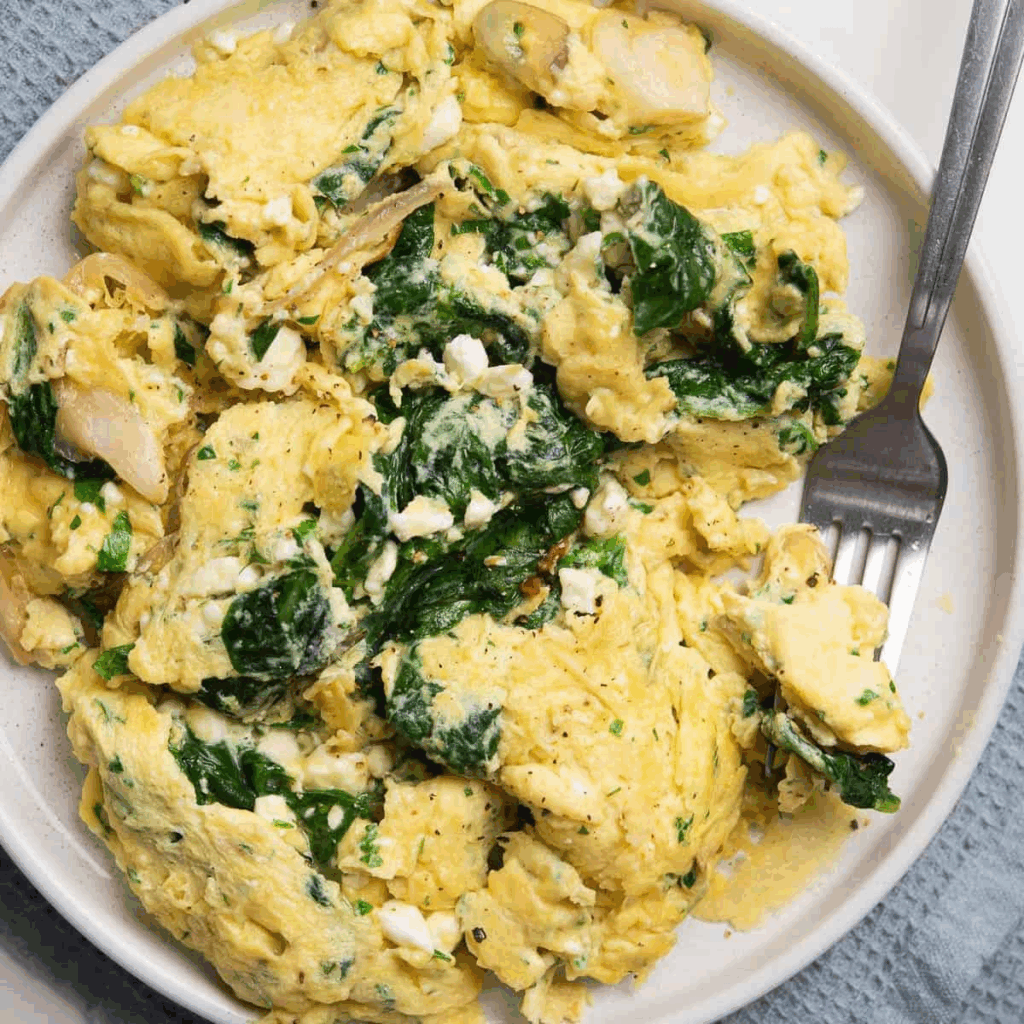
There’s a little Greek diner about twenty minutes from my house that Mike and I have been going to for years. It’s the kind of place with sticky vinyl booths and coffee that could wake the dead. For the longest time, I’d always order the same thing off their massive, plastic-coated menu: their “Greek Scramble.” It was a revelation—salty, creamy feta melting into the eggs, and pops of earthy spinach in every bite. After about the tenth visit, I decided I needed to crack the code and make it at home. After a few… let’s call them ‘less-than-successful’ attempts (we don’t talk about the overly watery spinach incident of 2019), I finally nailed it. This is my homage to that diner classic, but I dare say, even better. It’s got a little trick to wringing out the spinach that makes all the difference.
Quick Look
| Prep | Cook | Total | Feeds | Level |
|---|---|---|---|---|
| 10 mins | 10 mins | 20 mins | 2 people | Easy |
Why You’ll Love This Recipe
- It’s a flavor powerhouse. The salty, briny feta does all the heavy lifting, so you need very little other seasoning.
- It’s a sneaky way to get your greens in. And not just a sad little leaf; we’re packing a whole lot of spinach in there.
- It feels indulgent but is surprisingly light. You get that rich, creamy sensation from the feta without anything feeling heavy or greasy.
- It’s endlessly adaptable. I’ll give you some of my favorite add-ins below.
Grab These
- 4 large eggs
- 1 tablespoon olive oil
- 3 cups fresh baby spinach, roughly chopped (or 1/3 cup frozen spinach, thawed and squeezed DRY)
- 1/4 cup crumbled feta cheese (I love the block-style feta in brine for this—it’s creamier and less crumbly than the pre-crumbled kind)
- 2 tablespoons finely chopped red onion or shallot
- 1 clove garlic, minced
- A pinch of dried oregano (optional, but it really screams “Greek diner!”)
- Freshly cracked black pepper (you likely won’t need salt—the feta is plenty salty)
Let’s Make It
First things first: we need to deal with the spinach. If you’re using fresh (my preference for texture), give it a rough chop. Nothing fancy, just run your knife through it a few times. This prevents you from getting long, stringy spinach strands in your eggs. If you’re using frozen, you must, must, MUST squeeze every last drop of water out of it. I put it in a clean kitchen towel and wring it like I’m trying to get water from a stone. Any leftover moisture will make your eggs weepy and sad.
Now, whisk your eggs in a bowl with a good amount of black pepper and that pinch of dried oregano, if using. Remember, no aggressive whisking! Just combine them.
Heat the olive oil in your trusty non-stick skillet over medium heat. Add the red onion and sauté for 2-3 minutes, until it’s started to soften and become fragrant. Add the garlic and cook for just 30 more seconds—you want it golden and happy, not brown and bitter. Now, toss in all that fresh spinach. It’s going to look like a mountain, but don’t worry. Just keep stirring it around with your spatula. In about a minute, it will have wilted down into a small, dark green pile. This is perfect. If there’s any liquid in the pan from the spinach, just cook it for another 30 seconds until it evaporates.
Reduce the heat to medium-low. Pour your eggs directly over the spinach and onion mixture. Let them set for that initial 30 seconds, then start your gentle push-and-fold technique. Push the cooked edges toward the center, tilt the pan, and let the uncooked egg fill the space.
When the eggs are about 70% cooked—still quite wet-looking—it’s time for the feta. Sprinkle it evenly over the top. Continue to gently fold the eggs another couple of times, just to incorporate the feta and finish cooking the eggs. As soon as they’re no longer runny but still soft and creamy, take the pan off the heat. The residual heat will melt the feta beautifully.
Serve immediately. I don’t add any more salt until I taste it, because the feta is often salty enough on its own.
Nutritional Facts (Per Serving)
| Nutrient | Amount |
|---|---|
| Calories | ~ 280 kcal |
| Protein | 18g |
| Carbohydrates | 5g |
| Fat | 21g |
| Fiber | 1g |
| Sugar | 3g |
Note: Values are estimates
Variations & Add-Ins
- The “Village” Scramble: Add 1/4 cup of chopped, drained canned artichoke hearts and a tablespoon of chopped Kalamata olives when you add the spinach. It’s a full Greek feast.
- Herbaceous Twist: Stir in a tablespoon of fresh dill along with the feta. Dill and feta are a match made in heaven.
- For Some Heat: Add a pinch of red pepper flakes with the garlic.
Serving Ideas
- This is fantastic stuffed into a warm pita pocket with a dollop of tzatziki sauce. It’s the ultimate grab-and-go breakfast.
- I love it with a side of roasted potatoes, tossed with olive oil, oregano, and lemon juice.
- For a low-carb option, serve it alongside some sliced cucumbers, tomatoes, and red onion for a refreshing crunch.
Storage & Reheating
As with all scrambles, it’s best fresh. But leftovers will keep for a day in the fridge. Reheat gently in a microwave at 50% power, stirring halfway through. You may need to add a tiny teaspoon of water to loosen it up.
My Two Cents (Pro-Tip)
Don’t add the feta too early! If you add it when the eggs are still too raw, it will just dissolve and you’ll lose those lovely pockets of salty, creamy cheese. Wait until the eggs are mostly set, then fold it in at the last second.
You Asked, I’m Answering (FAQ)
Q: My scramble turned out a bit watery. What happened?
A: Ninety-nine times out of a hundred, this is from the spinach. Either you didn’t cook the fresh spinach long enough to evaporate its released water, or you didn’t squeeze the frozen spinach with enough brute force. Be ruthless with that moisture!
Q: Can I use other cheeses?
A: Absolutely! Goat cheese (chèvre) is a fantastic substitute for a tangier flavor. A sharp cheddar would work too, though it’ll take the dish in a totally different, non-Greek direction.