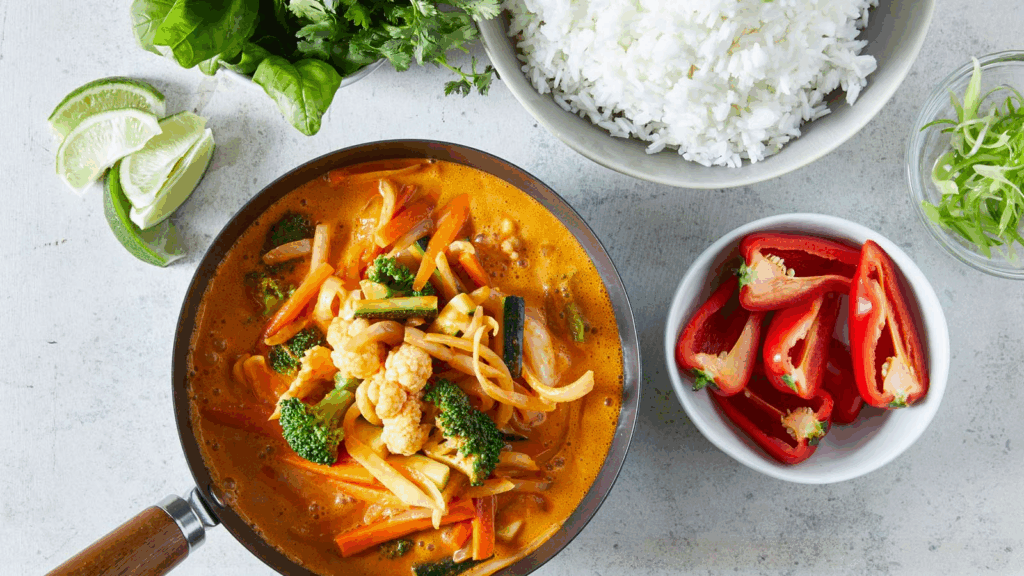
I’ll never forget the first time I made a truly great Thai red curry at home. It was a dreary Tuesday, the kind that makes you want to order takeout, and I was determined to crack the code. After one too many lackluster, watery attempts, I finally got a tip from a chef friend that changed everything. It’s embarrassingly simple, really. But it transformed my curry from “meh” to a vibrant, soul-warming hug in a bowl. This is that recipe. The one my family now begs for.
Quick Look
| Prep | Cook | Total | Feeds | Level |
|---|---|---|---|---|
| 15 mins | 20 mins | 35 mins | 4 people | Easy |
Why You’ll Love This Recipe
- It’s faster than takeout. Seriously. From fridge to table in about half an hour.
- Infinitely customizable. Got a lone sweet potato and a half-empty bag of peas? Toss them in.
- That restaurant-quality silkiness. The trick is all in the simmer, and I’ll walk you through it.
Grab These
- For the Curry:
- 1 tbsp coconut or avocado oil
- 1 small yellow onion, sliced
- 1 red bell pepper, sliced
- 4 tbsp Thai red curry paste (I swear by Mae Ploy or Maesri brands)
- 1 (13.5 oz) can full-fat coconut milk (please, don’t use light here)
- 1 cup vegetable broth
- 1 tbsp brown sugar
- 1 tbsp fish sauce (or soy sauce for a vegan version)
- 1 small zucchini, sliced into half-moons
- 1 cup snap peas
- Juice of half a lime
- For Serving:
- Cooked Jasmine rice
- Fresh cilantro and basil for garnish
Let’s Make It
Okay, first thing’s first: get your rice going. I always forget and then dinner is held hostage by a pot of steam. Once that’s simmering, let’s dive in.
In a large, deep skillet or Dutch oven, heat the oil over medium-high heat. Toss in your onion and bell pepper. We’re not looking to soften them completely, just get a little color and wake them up. A bit of char is a good thing! Give them about 4-5 minutes, then push them to the side of the pan.
This is the most important part. Add the curry paste to the empty space in the pan. Now, we’re going to fry it for a good 1-2 minutes, mashing it and stirring it until it’s deeply fragrant. This toasts the spices and wakes up all the dormant flavors. It’s the secret handshake. It should smell incredible.
Now, pour in about half a cup of the thick, creamy coconut fat from the top of the can. Whisk it with the fried curry paste. It’ll sizzle and seize up at first—that’s fine! Keep whisking until you have a thick, cohesive paste. This is your flavor base. Once it’s smooth, pour in the rest of the coconut milk and the vegetable broth. Add the brown sugar and fish sauce. Bring it to a lively simmer.
Let it bubble away for about 5 minutes to let the flavors get to know each other. Then, stir in your zucchini and snap peas. These quicker-cooking veggies will stay bright and crisp-tender. Simmer for another 4-5 minutes, just until they lose their raw edge. Kill the heat and stir in the lime juice. Taste it. Need more salt? A dash more fish sauce. Need more tang? More lime. You’re the boss.
Nutritional Facts (Per Serving, curry only)
| Nutrient | Amount |
|---|---|
| Calories | ~ 320 kcal |
| Protein | 6g |
| Carbohydrates | 20g |
| Fat | 26g |
| Fiber | 5g |
| Sugar | 11g |
| Note: Values are estimates |
Variations & Add-Ins
- Protein Power: Add 1 lb of peeled shrimp or cubed chicken breast with the zucchini. Just make sure it’s cooked through.
- Spicy Kick: Add a few thinly sliced Thai bird’s eye chilies when you fry the curry paste. You’ve been warned!
- Hearty Veggie: Swap in cubed sweet potato or eggplant. You’ll need to add them with the broth so they have time to soften.
Serving Ideas
I love this served over a fluffy mound of jasmine rice, with a big handful of fresh Thai basil and cilantro on top. The cool, crisp contrast of a simple cucumber salad on the side is just perfect.
Storage & Reheating
Let it cool completely before storing in an airtight container in the fridge for up to 3 days. Reheat gently in a saucepan over low heat. The sauce will thicken when chilled—just add a splash of water or broth when reheating to bring it back to life.
My Two Cents
Don’t just stir the curry paste into the liquid. You have to fry it first. I’m serious. It’s the single step that separates a flat, watery sauce from a deep, complex, restaurant-worthy curry. It makes all the difference.
You Asked, I’m Answering
- “My curry is too watery! What did I do wrong?” You probably didn’t simmer it long enough after adding the coconut milk. Let it reduce and thicken before adding the final veggies. And always use full-fat coconut milk!
- “Is it really spicy?” The brands I recommend have a gentle heat, but it’s totally adjustable. Start with 3 tablespoons of paste instead of 4 if you’re nervous.