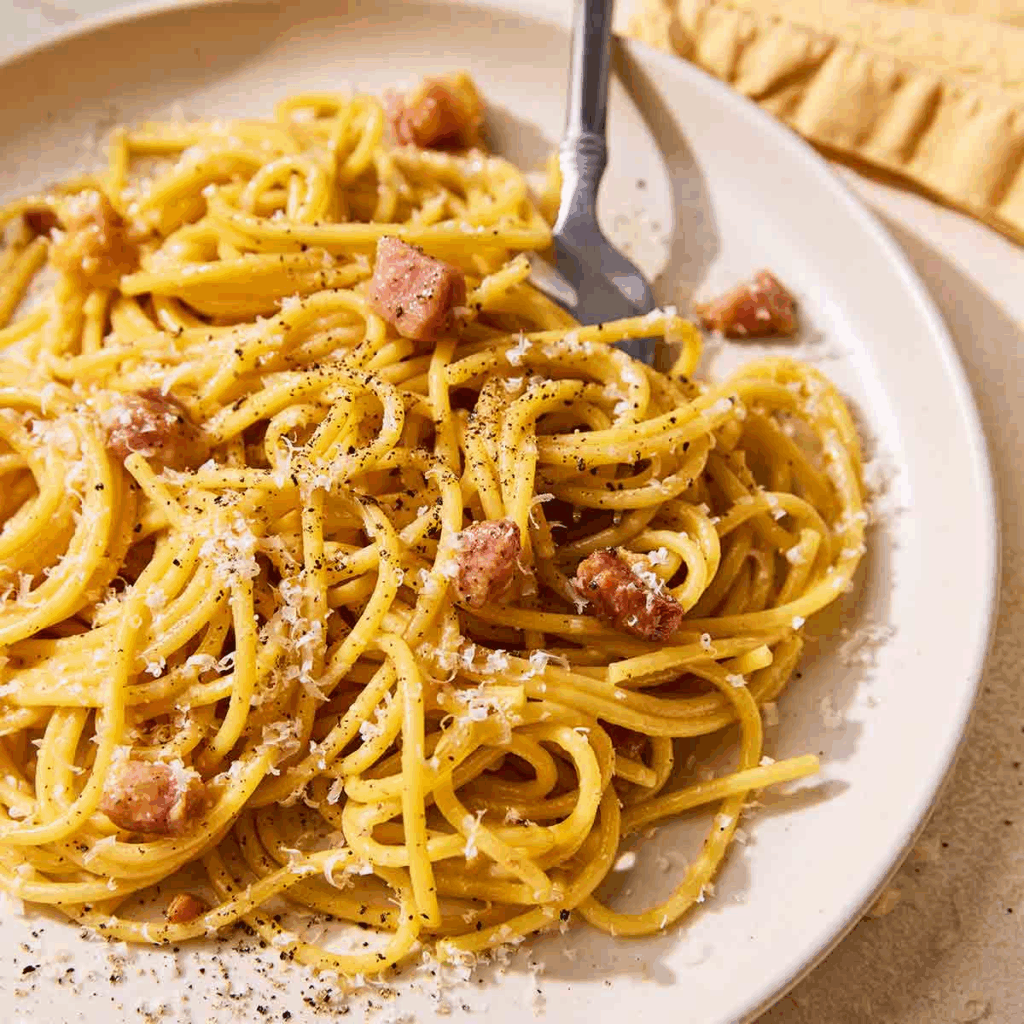
Let’s talk about Carbonara. No, not the one with peas and cream. I’m talking about the real Roman deal. The one that seems so simple but has the power to humble even the most confident cook. I learned this from a grumpy, wonderful nonna in a tiny Trastevere kitchen who slapped my hand away when I reached for the cream. It’s a lesson in restraint, quality, and timing. And when you get it right? It’s pure, unadulterated magic.
Quick Look
| Prep | Cook | Total | Feeds | Level |
|---|---|---|---|---|
| 10 mins | 15 mins | 25 mins | 4 people | Intermediate |
Why You’ll Love This Recipe
- It uses only 5 core ingredients. The beauty is in its simplicity.
- It comes together in the time it takes to boil pasta. The ultimate quick, elegant meal.
- Mastering this recipe feels like earning a culinary badge of honor.
Grab These
- 1 lb (450g) spaghetti (or bucatini, which is my favorite for this)
- 8 oz (225g) guanciale, diced (if you can’t find it, a good, thick-cut pancetta is fine. Bacon is a last-resort substitute—it’s smokier and will change the flavor profile.)
- 3 large eggs, at room temperature (this is critical!)
- 1 cup (about 100g) freshly and finely grated Pecorino Romano cheese (Parmigiano-Reggiano is more traditional in some parts, but I love the sharp saltiness of Pecorino)
- Lots of freshly cracked black pepper
- Salt for the pasta water
Let’s Make It
First, get your mise en place ready. Because this moves fast at the end, and you cannot be scrambling. Dice your guanciale. Grate your cheese. In a medium bowl, whisk the 3 eggs, then whisk in almost all of the grated Pecorino (save a little for garnish) and a very generous amount of black pepper. Set this bowl aside near your stove.
Bring a large pot of heavily salted water to a boil for your pasta. Cook the spaghetti according to package directions until it’s al dente. It must have some bite to it.
While the pasta cooks, add the diced guanciale to a cold, large skillet. Turn the heat to medium. This lets the fat render out slowly, so you end up with crispy, golden bits and beautiful rendered fat. Cook, stirring occasionally, until it’s crispy. Turn off the heat.
This is the crucial part. You need to work quickly and confidently. Using tongs, transfer the just-cooked pasta directly from the pot into the skillet with the guanciale and its fat. Do not drain it in a colander! A little starchy pasta water clinging to the noodles is your best friend. Toss the pasta vigorously in the fat to coat every strand.
Now, take the skillet off the heat entirely. Let it cool for just a minute—if the pan is too hot, you’ll scramble your eggs. Pour the egg and cheese mixture into the pasta, working quickly to toss and coat everything. The residual heat from the pasta will cook the eggs into a silky, creamy sauce. If it looks too thick, add a tablespoon or two of the reserved pasta water from the pot until it’s glossy and coats the spaghetti beautifully.
Nutritional Facts (Per Serving)
| Nutrient | Amount |
|---|---|
| Calories | ~ 720 kcal |
| Protein | 32g |
| Carbohydrates | 85g |
| Fat | 26g |
| Fiber | 3g |
| Sugar | 3g |
| Note: Values are estimates |
Variations & Add-Ins
- Classic Roman: Use a 50/50 mix of Pecorino Romano and Parmigiano-Reggiano for a slightly more complex, less sharp flavor.
- Garlic Infusion: While I was scolded for this in Italy, I sometimes add a whole, smashed garlic clove to the pan with the guanciale, removing it before adding the pasta. A subtle, lovely background note.
- Spring Carbonara: For a non-traditional but delicious twist, stir in a handful of fresh peas and some chopped parsley at the very end.
Serving Ideas
Serve immediately in warm bowls with an extra sprinkle of Pecorino and another crack of black pepper on top. That’s it. It needs nothing else but maybe a glass of crisp white wine and good company.
Storage & Reheating
Carbonara is best eaten immediately. Leftovers will not be the same, as the sauce tends to break and become greasy when reheated. If you must, the best method is to gently reheat it in a skillet with a splash of water, but manage your expectations.
My Two Cents
The single most important rule: NO HEAT WHEN ADDING THE EGGS. Take the pan off the burner and let it cool for a minute. Your patience will be rewarded with a creamy sauce, not carbonara-flavored scrambled eggs.
You Asked, I’m Answering
- Is it safe to eat raw eggs? The eggs are cooked by the residual heat of the hot pasta and pan, which is enough to bring them to a safe temperature without curdling. If you are immunocompromised, pregnant, or uncomfortable with this, this may not be the recipe for you.
- My sauce was watery/curdled. What happened? Watery usually means not enough cheese or not enough tossing. Curdled means the pan was too hot when you added the eggs. Don’t worry, I’ve done both. It’s a rite of passage. Try again!