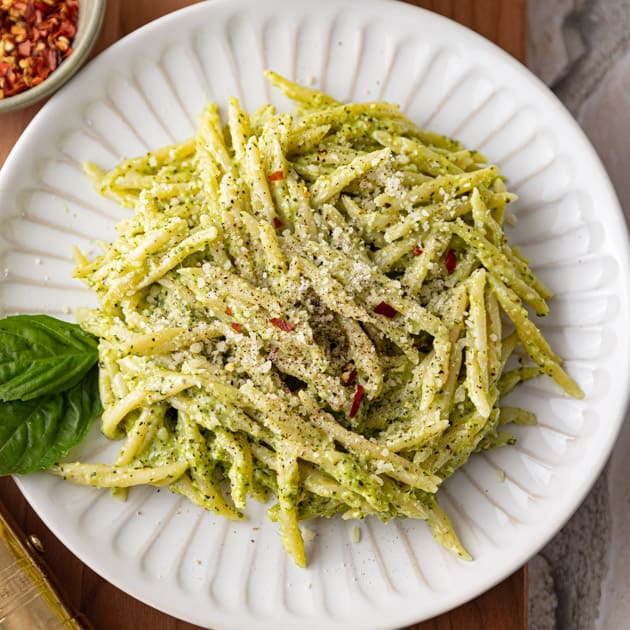
I have a distinct, core memory from a trip to Liguria: the smell of basil so potent it felt like the air itself was green. An old woman in a tiny shop was grinding pesto in a marble mortar, and the sound was a rhythmic, gentle thud. She saw me watching and simply handed me a spoonful. It was bright, sharp, and profoundly herbaceous—nothing like the dull, oily stuff I’d bought in jars back home. It was a conversion. This recipe is my attempt to capture that magic in my own kitchen, without a marble mortar (though if you have one, by all means!).
Quick Look
| Prep | Cook | Total | Feeds | Level |
|---|---|---|---|---|
| 15 mins | 12 mins | 27 mins | 4 | Easy |
Why You’ll Love This Recipe
- It’s explosively fresh. This pesto tastes like summer in a bowl.
- It’s faster than ordering takeout. Seriously, from fridge to table in under 30 minutes.
- You control the quality. No questionable additives or stale-tasting herbs.
- It’s incredibly versatile. Toss it in pasta, slather it on sandwiches, or use it as a marinade.
Grab These
For the Pesto:
- 2 cups (packed) fresh Genovese basil leaves (this is non-negotiable—find the brightest bunch!)
- ½ cup (50g) high-quality Parmesan cheese, freshly grated
- ¼ cup (25g) Pecorino Romano cheese, freshly grated (for a little bite)
- ⅓ cup (50g) pine nuts, lightly toasted (toasting is a MUST)
- 2 small garlic cloves, smashed (trust me, two is enough)
- ½ cup (120ml) extra-virgin olive oil (use the good stuff here)
- A big pinch of coarse sea salt
- Freshly cracked black pepper
For the Pasta:
- 1 lb (450g) trofie, trenette, or linguine pasta
- 1 small potato, peeled and cubed (optional, but traditional for trofie)
- A handful of green beans, trimmed and cut in half (also optional, but traditional)
Let’s Make It
First, let’s talk basil. You want to treat it like a delicate flower. Don’t wash the leaves until you’re ready to use them, and pat them completely dry. Any extra water will dilute your pesto and make it sad. Now, toast your pine nuts. Just a few minutes in a dry pan over medium heat until they’re fragrant and lightly golden. Watch them like a hawk—they burn in a heartbeat. Let them cool completely.
If you’re using a food processor (my weeknight hero), this is a breeze. Add the basil, cooled pine nuts, garlic, both cheeses, and a big pinch of salt. Pulse it a few times until it’s coarsely chopped. Now, with the processor running, slowly stream in the olive oil until it’s just combined. You’re not looking for a completely smooth puree; a little texture is lovely. Taste it. Adjust with more salt or a crack of black pepper. That’s it. See? Easy.
If you’re going the traditional mortar and pestle route, God bless you. You’ll get a creamier, more emulsified sauce. Start by crushing the garlic and pine nuts with the salt into a paste. Then, add the basil leaves a handful at a time, grinding in a circular motion until broken down. Work in the cheeses, then finally, slowly drizzle in the oil.
Now, for the pasta. Bring a large pot of heavily salted water to a boil. If you’re going full Ligurian-style with the potato and green beans, add the cubed potato to the boiling water first. After about 5 minutes, add your pasta and the green beans. Cook until the pasta is al dente. The starchy water is liquid gold for your sauce. Before you drain it, scoop out about a cup of that pasta water. Drain the pasta and veggies, but don’t rinse them! Return everything to the hot pot.
Add your gorgeous, fresh pesto to the hot pasta. Now, here’s the chef’s kiss: add a splash of that reserved pasta water, maybe ¼ cup to start. Toss everything vigorously. The starch in the water will help the pesto cling to every inch of pasta, creating a creamy, emulsified sauce that doesn’t separate. If it seems dry, add another splash. Serve immediately.
Nutritional Facts (Per Serving)
| Nutrient | Amount |
|---|---|
| Calories | ~ 520 kcal |
| Protein | 18g |
| Carbohydrates | 45g |
| Fat | 30g |
| Fiber | 3g |
| Sugar | 2g |
| Note: Values are estimates |
Variations & Add-Ins
- Nut-Free: Can’t do pine nuts? Toasted walnuts or almonds are a fantastic, and more affordable, substitute.
- Creamy Pesto: Stir in a tablespoon or two of mascarpone cheese along with the pesto for an ultra-luxurious, creamy version.
- Lemon Zest: A little grated lemon zest brightens the whole thing up beautifully.
Serving Ideas
- Keep it simple. This pasta deserves to be the star. Just a little extra grating of Parmesan on top is all you need.
- Serve with a simple grilled chicken breast or a piece of pan-seared salmon for a more substantial meal.
- A crisp, dry white wine like a Vermentino or a Pinot Grigio is the perfect pairing.
Storage & Reheating
- To store leftover pesto, press plastic wrap directly onto its surface to prevent oxidation (browning), then seal in an airtight container. It’ll keep in the fridge for about 3 days.
- You can freeze pesto perfectly! I freeze it in an ice cube tray, then pop the cubes out into a freezer bag. Perfect for single servings.
- Reheating pesto pasta can be tricky. Gently warm it in a skillet with a tiny splash of water or olive oil to loosen it up. The microwave can make it separate.
My Two Cents
Don’t you dare cook the pesto! You just mix it with the hot pasta. Heating it in a pan will cook the basil and make it lose that vibrant, fresh flavor and color. The residual heat from the pasta is all you need.
You Asked, I’m Answering
- “Why did my pesto turn brown?” Basil oxidizes quickly when exposed to air. That layer of oil on top and the plastic wrap pressed directly on the surface are your best defenses. A little browning is natural, but this method minimizes it.
- “My pesto is too bitter. What happened?” You might have over-processed it, bruising the basil, or your garlic was too strong. Try using one clove next time, or blanch the garlic for 30 seconds in boiling water to mellow its bite.