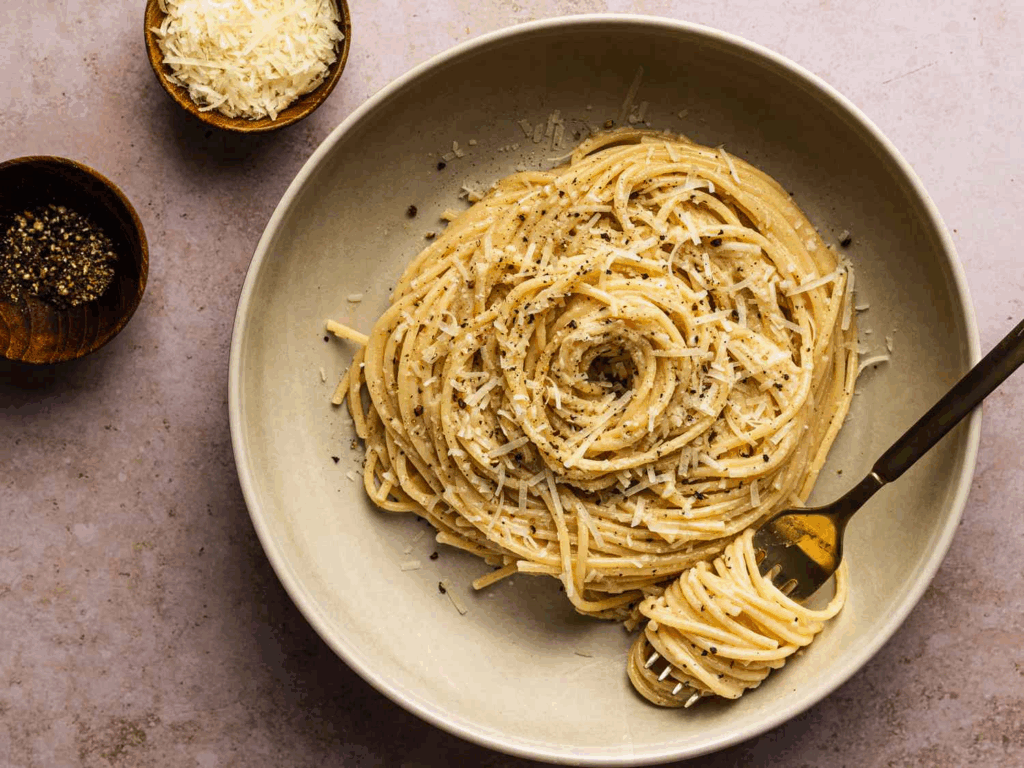
I messed this up so many times. I’m talking clumpy, greasy, broken sauce disasters. I almost gave up, convinced it was some Roman magic I’d never master. Then, on a particularly determined Tuesday, I figured out the rhythm. It’s not about fancy ingredients; it’s about technique. It’s a simple, humble dish that demands your respect. When you get it right—when you achieve that creamy, peppery, cheesy sauce with no cream in sight—it feels like a minor miracle. This is the method that finally worked for me.
Quick Look
| Prep | Cook | Total | Feeds | Level |
|---|---|---|---|---|
| 5 mins | 15 mins | 20 mins | 2 | Intermediate |
Why You’ll Love This Recipe
- It’s pure, unadulterated comfort. Just cheese, pepper, and pasta. That’s it.
- It’s a technical masterpiece in a bowl. Nailing this recipe will make you a better cook, I promise.
- It’s ready in the time it takes to boil water.
- It proves that less is almost always more.
Grab These
- 8 oz (225g) tonnarelli or spaghetti (De Cecco is my go-to brand for this)
- 1 cup (about 100g) finely grated Pecorino Romano cheese (get a wedge and grate it yourself—the pre-grated stuff has anti-caking agents and will not work)
- 1 tbsp whole black peppercorns, freshly cracked (use a mortar and pestle or a skillet)
- Salt for the pasta water
Let’s Make It
This is all about mise en place—having everything ready to go. So, first, grate your cheese into a bowl. It needs to be a fine grate, almost like a powder. This is crucial for a smooth sauce. Next, crack your peppercorns. I like a coarse crack for a real bite. Don’t use pre-ground pepper; it tastes like dust. Now, put a large skillet (not the pot you’re boiling pasta in) on low heat. Add your cracked pepper and toast it for just a minute until it’s incredibly fragrant. This wakes up the oils and makes the flavor pop. Take it off the heat.
Now, the pasta. Bring a pot of water to a boil. Salt it well—it should taste like the sea. This is your only chance to season the pasta itself. Cook your pasta until it’s just one minute shy of al dente. It needs to be very firm still.
Here’s where the magic happens. Right before the pasta is done, take a ladle and scoop out about a cup and a half of the starchy pasta water. Add about ¾ cup of this water to your skillet with the toasted pepper. Bring it to a gentle simmer over medium heat.
Using tongs, transfer your almost-cooked pasta directly from the pot into the skillet. Don’t drain it! The water clinging to it is important. Let the pasta finish cooking in the peppery water, tossing it almost constantly. The starch from the pasta is now in the water, and as you toss, it will start to thicken into a creamy, emulsified sauce. Turn the heat down to low.
Take the skillet completely off the heat. This is the most critical step. If the pan is too hot, the cheese will seize up into a clumpy mess. Let it cool for about 30 seconds. Now, sprinkle in your finely grated Pecorino a little at a time, tossing continuously and vigorously. Add a splash more of the reserved pasta water if it looks too thick. You’re looking for a creamy, smooth sauce that coats every strand, not a clump in sight. If it’s too thin, return it to very low heat for just a few seconds, tossing constantly. Serve immediately in warm bowls.
Nutritional Facts (Per Serving)
| Nutrient | Amount |
|---|---|
| Calories | ~ 480 kcal |
| Protein | 22g |
| Carbohydrates | 65g |
| Fat | 15g |
| Fiber | 3g |
| Sugar | 2g |
| Note: Values are estimates |
Variations & Add-Ins
- Cacio e Pepe with a Twist: Finish with a squeeze of lemon juice right at the end to cut through the richness.
- “Almost” Carbonara: Stir in an egg yolk at the very end, off the heat, for an even richer, silkier sauce. (It’s not traditional, but it’s delicious).
- Garlic Infusion: Add a smashed garlic clove to the pepper while toasting it, then fish it out before adding the pasta water.
Serving Ideas
- This is a primo piatto—a first course. Serve it in smaller portions.
- It’s fantastic with a simple, bitter green salad afterwards.
- A glass of chilled, dry white wine like a Frascati is the perfect companion.
Storage & Reheating
- Honestly, this is best eaten immediately. The sauce can break when reheated.
- If you must, reheat the leftovers very gently in a non-stick skillet with a tablespoon or two of water, stirring constantly.
My Two Cents
Your two commandments: 1) Take the pan OFF the heat before adding the cheese. 2) Use the starchy pasta water like it’s liquid gold. Master these, and you’ve mastered the dish. The cheese and the heat are frenemies; you have to introduce them carefully.
You Asked, I’m Answering
- “Why did my sauce get clumpy and oily?” The pan was too hot when you added the cheese. It’s almost always that. The proteins in the cheese tighten up and squeeze out the fat. Cool the pan down next time!
- “Can I use Parmesan instead of Pecorino?” You can, but it’ll be a different (and milder) dish. Pecorino is saltier and sharper, which stands up to the black pepper. A 50/50 mix is a great compromise if Pecorino is too intense for you.