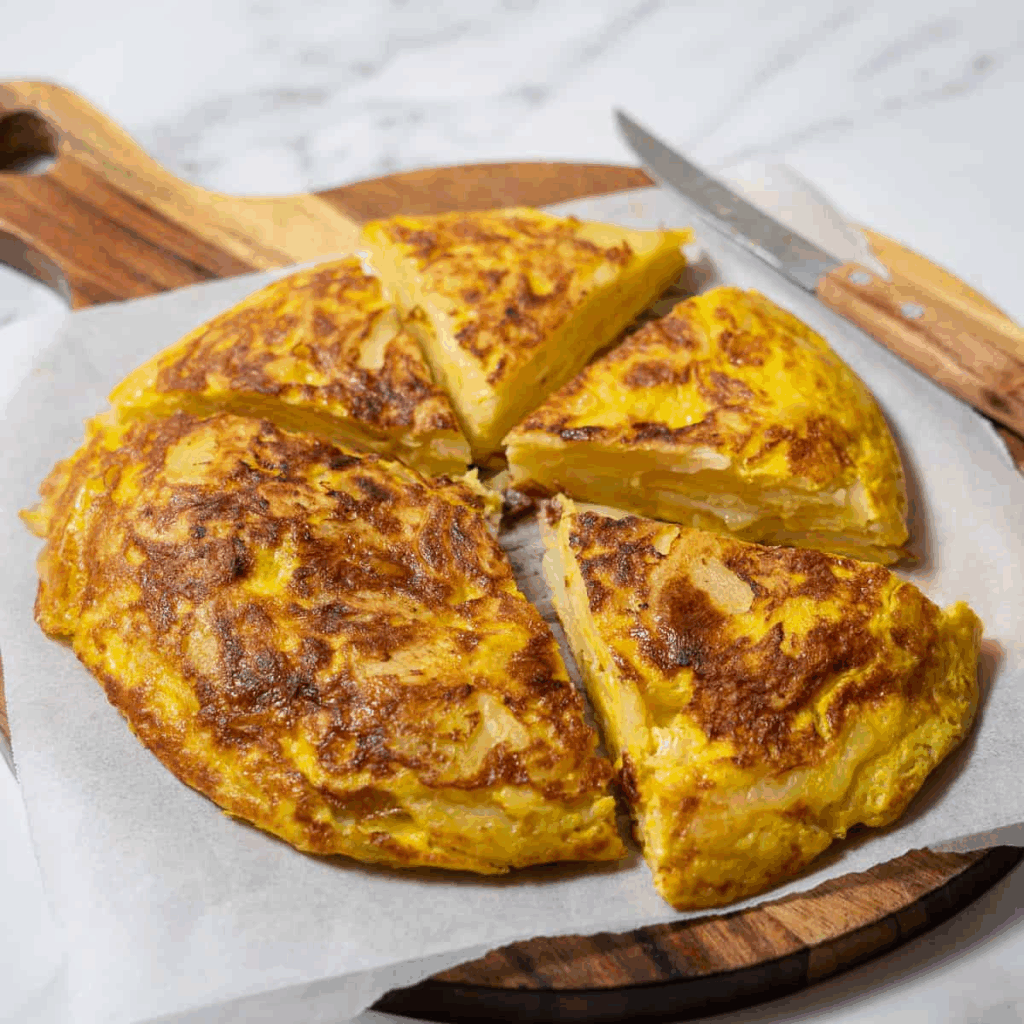
I still remember the first time I had a true Tortilla Española. I was 22, backpacking and hopelessly lost in a narrow Seville alleyway. The smell of frying potatoes and onions pulled me into a tiny, standing-room-only bar. The bartender slid a thick, room-temperature wedge of this golden, cake-like omelette across the counter with a glass of rough red wine. One bite and I understood. This wasn’t just eggs; it was a cultural institution. It was hearty, simple, and profoundly comforting. I’ve spent years trying to replicate that moment in my own kitchen, and while my version will never quite match the magic of that Spanish afternoon, it comes awfully close.
Quick Look
| Prep | Cook | Total | Feeds | Level |
|---|---|---|---|---|
| 20 mins | 30 mins | 50 mins | 4-6 as a tapa | Intermediate |
Why You’ll Love This Recipe
- It’s a showstopper that looks incredibly impressive but is built on the humblest of ingredients.
- It’s meant to be eaten at room temperature, making it the ultimate make-ahead dish for picnics, parties, or lazy weekend grazing.
- The texture is everything—creamy, soft, and substantial all at once.
- It will transport you straight to a sun-drenched Spanish plaza. No passport required.
Grab These
- 1 ½ pounds (about 3 medium) Yukon Gold potatoes (Their waxy texture is key! Russets will fall apart.)
- 1 large yellow onion, thinly sliced
- 1 ½ cups extra-virgin olive oil (Yes, this seems like a lot. Don’t panic—you’ll drain most of it off and it’s what makes the magic happen.)
- 6 large eggs
- 1 ½ teaspoons kosher salt
- Freshly cracked black pepper
Let’s Make It
Alright, the most important step here is patience. This isn’t a rush-job. Peel your potatoes and slice them uniformly thin, about ⅛-inch thick. A sharp knife or mandoline is your best friend here. Don’t rinse them; we want the starch. Thinly slice your onion as well.
Now, here’s where we break from tradition a bit. Purists will fry the potatoes and onions in that copious amount of olive oil on the stovetop, and you absolutely can. But my cheat? I use a 10-inch cast-iron skillet and pour in the 1 ½ cups of olive oil, add the potatoes and onions, and make sure they’re mostly submerged. Then, I slide the whole skillet into a 300°F (150°C) oven for about 20-25 minutes. This gently poaches them until they are meltingly tender but not browned. No standing over a hot spattering pan. You’re welcome.
While that’s happening, whisk your six eggs with the salt and a good amount of pepper in a large bowl until they’re frothy. Once the potatoes and onions are fork-tender, use a slotted spoon to carefully lift them out of the hot oil and directly into the egg bowl. That hot oil will stay behind—save it! It’s now gorgeous, infused potato-onion oil perfect for roasting vegetables or making vinaigrettes. Gently fold the warm potato mixture into the eggs. Let it sit for 10 minutes. This resting time is non-negotiable; it allows the potatoes to soak up the egg, creating that signature creamy interior.
Nutritional Facts (Per Serving – 1 of 6 slices)
| Nutrient | Amount |
|---|---|
| Calories | ~ 320 kcal |
| Protein | ~ 10g |
| Carbohydrates | ~ 22g |
| Fat | ~ 21g |
| Fiber | ~ 2g |
| Sugar | ~ 3g |
| *Note: | Values are estimates |
Variations & Add-Ins
- The Great Debate (Runny Center): In some regions, the center is still a little runny. If you’re brave, cook the tortilla for a minute or two less on each side before flipping.
- With a Kick: Stir in ¼ cup of finely chopped chorizo (the Spanish, hard-cured type) when you add the potatoes to the eggs.
- Green & Fresh: Fold in a handful of frozen peas (thawed) for a pop of color and sweetness.
Serving Ideas
This is the star of any tapas spread. Serve it in wedges with a bowl of marinated olives, some Manchego cheese, and a drizzle of garlicky aioli. For a simple lunch, it’s perfect with a bright, bitter salad of escarole and a sherry vinaigrette. And for the ultimate Spanish experience, tuck a wedge into a crusty baguette for a bocadillo de tortilla.
Storage & Reheating
This keeps beautifully. Let it cool completely to room temperature, then wrap it tightly or store it in an airtight container in the fridge for up to 3 days. I actually think it tastes better the next day. Eat it cold, at room temperature, or gently warm a slice in a skillet.
My Two Cents (Pro-Tip)
The Flip. It’s intimidating, I know. My advice? Use a plate that’s larger than your skillet. Place it upside down on top of the skillet, take a deep breath, hold the plate firmly with one hand and the skillet handle with the other, and in one confident motion, flip it over. The tortilla will drop onto the plate. Then, just slide it back into the skillet to cook the other side. You can do it!
You Asked, I’m Answering (FAQ)
Q: My tortilla stuck to the plate during the flip! What happened?
A: Oh, I’ve been there. The most likely culprit is that the first side wasn’t cooked enough to release from the pan. Make sure you can easily shake the pan and see the tortilla sliding around before you even think about flipping. A well-seasoned cast-iron or non-stick pan is essential.
Q: Can I use less oil? It seems so wasteful.
A: I hear you, but the oil is what confits the potatoes, giving them that unique, silky texture without frying them crisp. The good news is you can strain and reuse that oil multiple times for future tortillas or other cooking. It’s a fantastic ingredient, not waste!