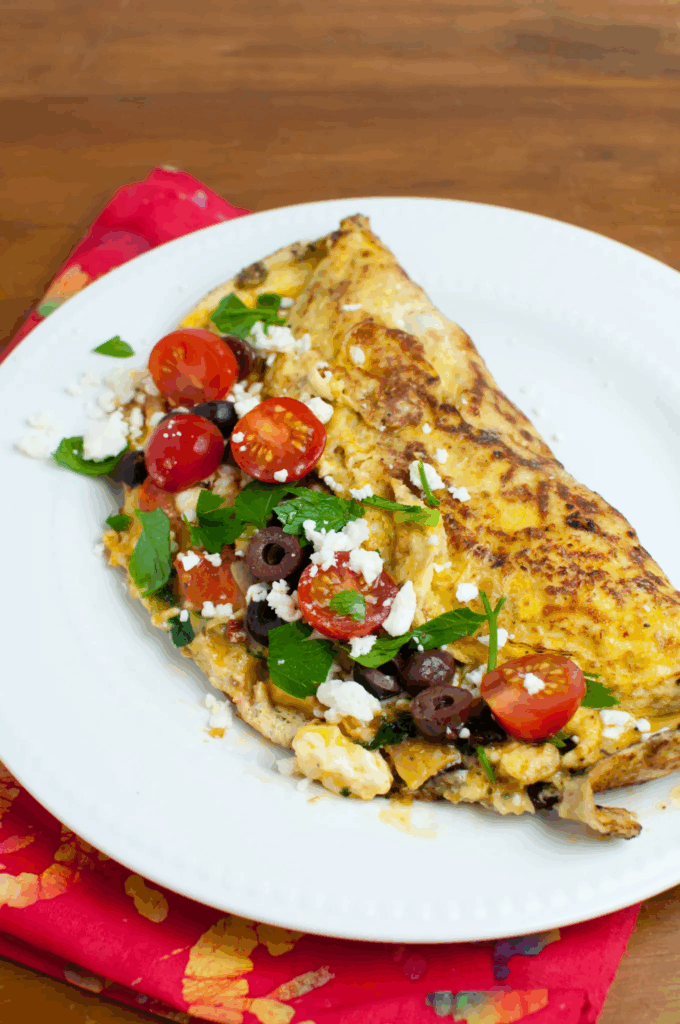
My Yia-yia (that’s Greek for grandmother) could make an omelette that was a work of art. It wasn’t fussy or filled with a dozen things, but it was perfect. Golden, slightly crisp on the outside, and tender within, with just a few powerful, classic flavors. She’d serve it with a wedge of lemon, and that bright, acidic squeeze at the end… it was a revelation. This Greek Omelette is my humble tribute to her. It’s my attempt to capture that sunny, uncomplicated spirit in a pan. It’s a little more structured than a scramble, a little more elegant, and it makes any morning feel like a special occasion.
| Prep | Cook | Total | Feeds | Level |
|---|---|---|---|---|
| 5 mins | 10 mins | 15 mins | 1 very satisfied person | Intermediate |
Why You’ll Love This Recipe
- It’s a masterclass in simplicity. With just a few high-quality ingredients, you create a meal that’s far greater than the sum of its parts.
- The lemon finish is a game-changer. It cuts through the richness of the eggs and feta in a way that will make you wonder why you haven’t been doing this your whole life.
- It looks incredibly impressive. Flipping (or folding) a beautiful, intact omelette gives you a kitchen confidence boost that lasts all day.
**Grab These
This is about quality, not quantity. Measure with your heart, but here’s a guide.
- For the Omelette: 2-3 large eggs, 1 tablespoon of water, a pinch of salt and pepper, 1 teaspoon of olive oil or butter (I use a combination—butter for flavor, a drop of oil to prevent burning).
- The Filling: 2 tablespoons of crumbled feta cheese, 1 tablespoon of chopped fresh spinach, 1 tablespoon of finely chopped red onion, 1 teaspoon of chopped fresh dill or oregano.
- The Finishing Touch: A thin slice of lemon for serving. (Don’t you dare skip this.)
Let’s Make It
Alright, let’s talk technique. This is where I hear my Yia-yia’s voice in my head. Crack your eggs into a bowl, add the water, salt, and pepper. The water creates steam which helps make the omelette light. Now, whisk them with a fork until the whites and yolks are just combined. You don’t want it to be foamy, just uniform. A few small bubbles are fine.
Place your 8 or 10-inch non-stick skillet over medium-high heat. Add your fat—butter and oil, or just oil—and let it get hot. You’ll know it’s ready when the butter’s foaming has subsided or the oil shimmers. Pour in the eggs. They should sizzle politely upon arrival. Let them cook for about 10-15 seconds, just until the edges start to set.
Now, with a spatula, pull the cooked edges toward the center, tilting the pan so the uncooked egg runs into the space you created. Do this a few times around the pan until there’s no more loose liquid egg sloshing around, but the top is still a little wet. This is the moment of truth.
Sprinkle your filling—the feta, spinach, red onion, and dill—over one half of the omelette. Don’t be greedy; overstuffing is the number one reason omelettes tear. Using your spatula, carefully lift the unfilled side and fold it over the filling. Now, this is important: slide the omelette out of the pan and onto your plate immediately. It will continue to cook from the residual heat, and the filling will wilt the spinach perfectly.
Nutritional Facts (Per Serving)
| Nutrient | Amount |
|---|---|
| Calories | ~ 350 kcal |
| Protein | 24g |
| Carbohydrates | 6g |
| Fat | 26g |
| Fiber | 1g |
| Sugar | 3g |
| Note: Values are estimates |
Variations & Add-Ins
- The Spanakopita Omelette: Add a generous tablespoon of chopped, well-drained frozen spinach (thawed, of course) and a tiny pinch of freshly grated nutmeg with the other fillings. It’s like having the classic Greek pie for breakfast.
- Meat Lover’s Version: Add a tablespoon of chopped, cooked lamb or chicken sausage. It makes it incredibly hearty.
- Kalamata Kick: Add a few sliced kalamata olives for a briny, salty punch.
Serving Ideas
This omelette is a star that needs little support, but it loves good company.
- Simply with a wedge of lemon to squeeze over the top and a grind of black pepper. This is the traditional way and it is perfect.
- Alongside a few slices of ripe tomato sprinkled with a little sea salt and more dill.
- With a piece of crispy, buttered toast for scooping up any runaway bits of feta.
Storage & Reheating
Omelettes are really best served straight from the pan. The texture changes when it’s refrigerated and reheated. If you must, store it in an airtight container for up to a day. Reheat it gently in a toaster oven or a regular oven at 300°F until warm to avoid the rubbery texture the microwave will give it.
My Two Cents (Pro-Tip)
Your pan is everything. Use a good non-stick skillet that you reserve just for eggs. If your eggs stick, you’re fighting a losing battle from the start. Also, don’t be afraid of the heat. A pan that’s too cool will give you tough, dry eggs. You want it nice and hot so the eggs set quickly and stay tender.
You Asked, I’m Answering (FAQ)
Q: I’m terrified of flipping the omelette. Any advice?
A: First, you don’t need a dramatic chef’s flip! The fold-and-tilt method is your friend. But if you want to try flipping, practice with a piece of bread in the pan first. The motion is a confident, quick jerk of the wrist to get the omelette to do a half-somersault. And if it breaks? Congratulations, you’ve made a delicious Greek scramble. No stress.
Q: Can I use dried herbs instead of fresh?
A: You can, but the flavor will be much more muted. If you must, use about 1/3 of the amount of dried oregano (dill doesn’t dry well, in my opinion). But really, fresh herbs make this dish sing.