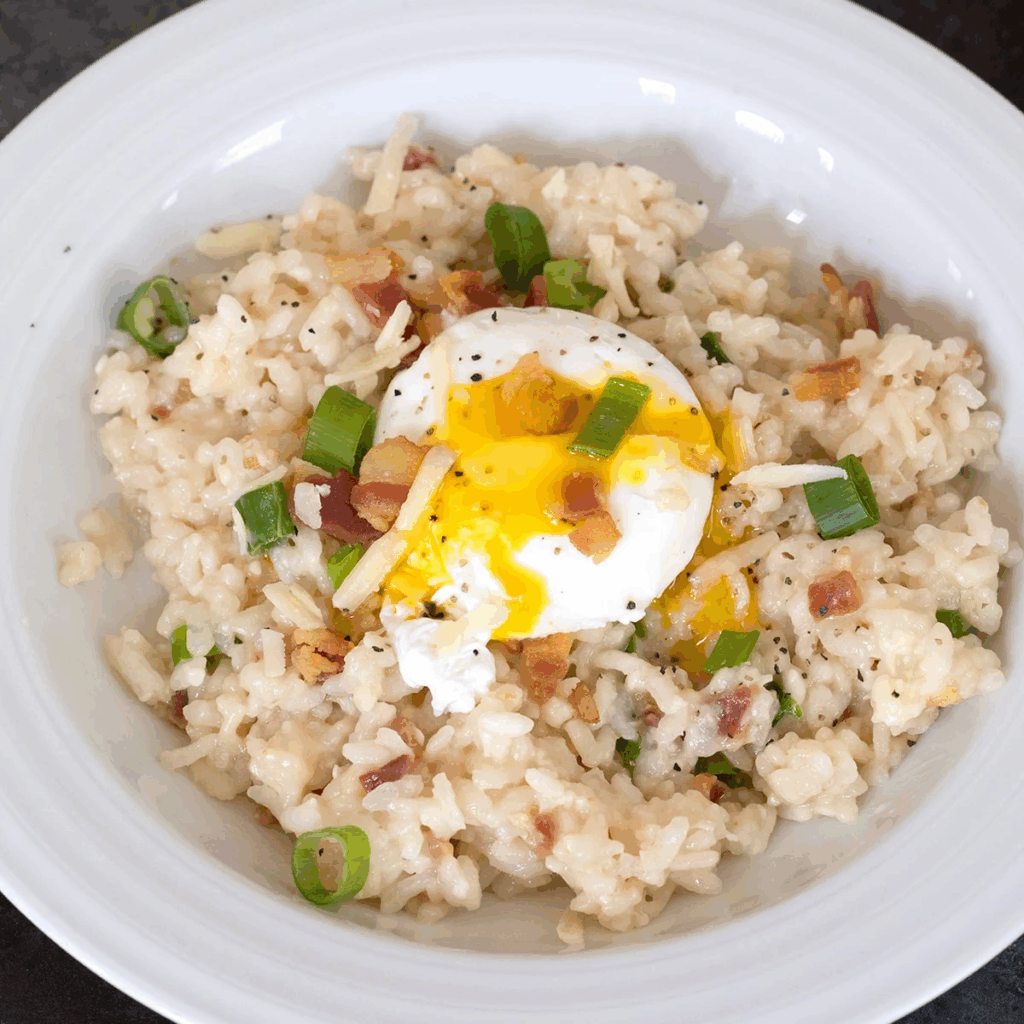
I know what you’re thinking. “Clara, have you lost your mind? Risotto? For breakfast?” Hear me out. This isn’t some gimmick. It was born out of a desperate, hungry morning where my only options were leftover risotto and a few eggs. The result was so profoundly good, so creamy and savory and right, that it’s now a regular in our rotation. It’s for those slow weekend mornings where you want to putter around the kitchen, sipping coffee and tending to a pot. It’s a labor of love, but my goodness, what a reward.
Quick Look
| Prep | Cook | Total | Feeds | Level |
|---|---|---|---|---|
| 10 mins | 30 mins | 40 mins | 2 | Intermediate |
Why You’ll Love This Recipe
- It’s unbelievably luxurious without needing any fancy ingredients.
- The process is meditative. Stirring the pot is a form of kitchen therapy.
- It’s a brilliant way to use up leftover risotto, but it’s worth making from scratch, too.
Grab These
- 1/2 cup Arborio rice (don’t substitute another kind—this is non-negotiable for the creaminess)
- 3 cups warm chicken or vegetable broth (keep it simmering on a back burner)
- 1 small shallot, finely minced
- 1 clove garlic, minced
- 1/2 cup dry white wine (like a Sauvignon Blanc—something you’d drink. Or just use more broth)
- 2 tablespoons unsalted butter, divided
- 1/4 cup freshly grated Parmesan cheese, plus more for serving
- Salt and freshly cracked black pepper
- For Serving:
- 2 fresh eggs
- Chopped fresh chives or parsley
- Crispy pancetta or bacon (optional, but highly recommended)
Let’s Make It
The key to a great risotto, breakfast or otherwise, is patience. And warm broth. I’ll say it again: WARM BROTH. Adding cold broth to your rice is like throwing an ice cube into a warm bath—it shocks the grains and stops the cooking process dead. So, first step: get your broth heating in a separate saucepan. Keep it at a gentle simmer.
In a wide, heavy-bottomed pot (I use my Dutch oven), melt one tablespoon of the butter over medium heat. Add the minced shallot and a pinch of salt and cook until it’s soft and translucent, about 3-4 minutes. Don’t let it brown! Then, add the garlic and stir for just 30 seconds until fragrant. Now, toss in your Arborio rice. Stir it around for a minute or two until the edges of the grains look a little translucent. This is called “toasting” the rice and it helps the grains stay al dente later.
Here comes the fun part. Pour in your white wine. It’s going to sizzle and steam and smell amazing. Stir continuously until the wine is completely absorbed by the rice. Now, start adding your warm broth, one ladleful at a time. This is the ritual. Add a ladle, stir gently but consistently until the liquid is almost all absorbed, then add another ladle. Repeat. Don’t rush. This process of gradual absorption is what coaxes the starch out of the rice, creating that signature creamy sauce. It should take about 20-25 minutes.
You’ll know it’s done when the rice is tender but still has a slight bite to it (al dente!), and the overall consistency is creamy and loose. It should spread slowly in the bowl, not sit in a stiff mound. Take it off the heat. Now, stir in the remaining tablespoon of cold butter and the grated Parmesan. This step, called “mantecatura,” is the final flourish that makes the risotto super glossy and rich. Season with salt and a generous amount of black pepper.
While the risotto is in its final stages, fry or poach your eggs. I’m a fried egg person for this—I love the crispy edges. Divide the risotto between two bowls, make a little well in the center, and place your perfect egg right on top. Sprinkle with chives, more parmesan, and your crispy pancetta if you’re using it. Break that yolk and let it run into the creamy rice. You’re welcome.
Nutritional Facts (Per Serving, with 1 egg)
| Nutrient | Amount |
|---|---|
| Calories | ~ 480 kcal |
| Protein | 18g |
| Carbohydrates | 52g |
| Fat | 20g |
| Fiber | 2g |
| Sugar | 3g |
| Note: Values are estimates. |
Variations & Add-Ins
- Lemon & Herb: Stir in the zest of one lemon and two tablespoons of fresh chopped herbs (like parsley, dill, and chives) with the final butter and parmesan.
- Mushroom & Sage: Sauté sliced mushrooms and fresh sage leaves in the first tablespoon of butter before adding the shallot. Remove the crispy sage for garnish and proceed.
- Spring Veggie: Stir in a handful of fresh peas and some chopped asparagus tips during the last 5 minutes of cooking.
Serving Ideas
This is a rich, stand-alone dish. All it needs is a simple side to cut through the richness. A bright, bitter side salad of arugula with a lemon vinaigrette is absolute perfection. And a big mug of strong coffee. Always coffee.
Storage & Reheating
Leftover risotto is a gift. It will thicken considerably in the fridge. The best way to reheat it is in a saucepan over low heat with a splash of broth or water, stirring until it becomes creamy again. You can also form cold leftover risotto into patties and pan-fry them for incredible risotto cakes!
My Two Cents
Your broth should be hot. I can’t stress this enough. It is the single most important factor in achieving a creamy, properly cooked risotto. If the broth is cold, the rice grains will seize up and the middle will stay hard. Just keep a small pot simmering away next to your main pot.
You Asked, I’m Answering
- “Do I really have to stir constantly?” Well… yes. For the best, creamiest result, you do. You can get away with a few 10-second breaks to sip your coffee or crack an egg, but constant, gentle agitation is what releases the starch. It’s the heart of the recipe.
- “My risotto is too runny / too thick!” Too runny? Just keep cooking for another minute or two—the excess liquid will evaporate. Too thick? Easy fix. Whisk in another splash of warm broth until it loosens up to your liking.