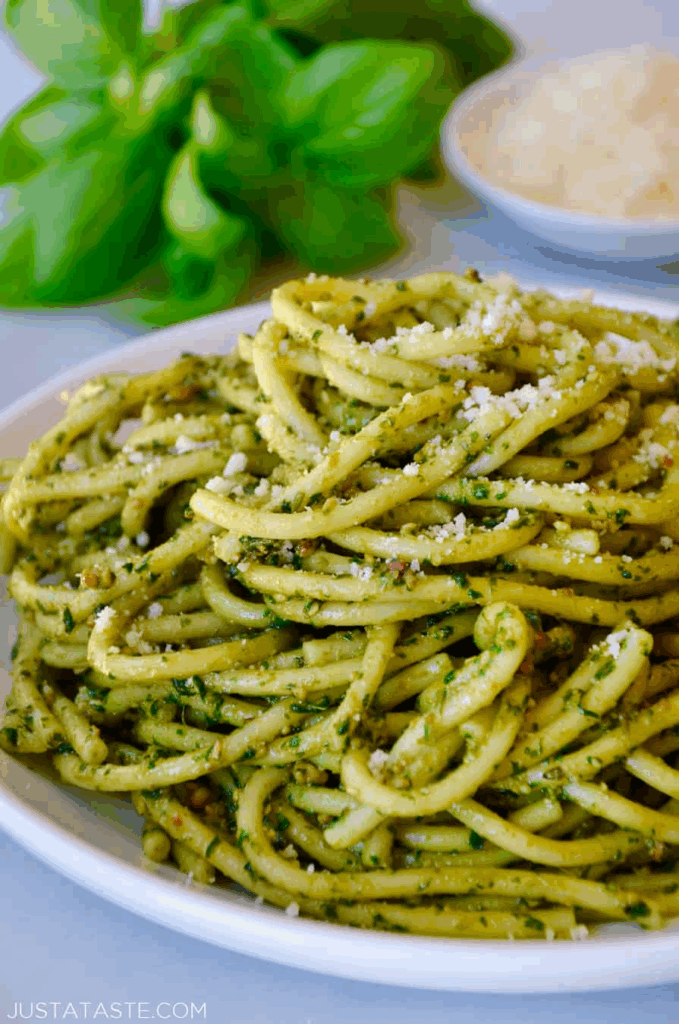
My relationship with pesto used to be… transactional. You know, the kind that comes in a little jar, tastes vaguely of basil and garlic, and gets the job done on a busy night. Then I went to Liguria. I still dream about that trip, and specifically, about the pesto. It was a revelation—vibrant, emerald green, and tasted so profoundly fresh. The woman who made it told me, through a translator, that her secret was crushing the ingredients in a marble mortar with a wooden pestle, “to not anger the basil.” I don’t have a marble mortar (a girl can dream), but I’ve perfected a method that gets shockingly close without bruising the basil’s delicate soul. This isn’t just a sauce; it’s a summer afternoon captured in a bowl.
Quick Look
| Prep | Cook | Total | Feeds | Level |
|---|---|---|---|---|
| 15 mins | 15 mins | 30 mins | 4 | Easy |
Why You’ll Love This Recipe
- It tastes like pure, unadulterated summer.
- Blitzing it in a food processor makes it incredibly easy (and I won’t tell the nonnas in Liguria).
- It’s incredibly versatile—a sauce for pasta, a spread for sandwiches, a dollop on soup.
- Freezes beautifully, so you can have a taste of summer in the dead of winter.
Grab These
- For the Pesto:
- 2 cups packed fresh Genovese basil leaves (this is key—the smaller, more tender leaves)
- 1/2 cup extra-virgin olive oil (a good, fruity one)
- 1/3 cup pine nuts, lightly toasted
- 2 small cloves of garlic, crushed
- 1/2 cup finely grated Parmigiano-Reggiano
- 1/4 cup finely grated Pecorino Romano (this adds a little salty bite)
- A big pinch of coarse sea salt
- 1 lb. spaghetti
Let’s Make It
First, let’s talk about the basil. This is the heart of the dish, so we must treat it with respect. Gently wash the leaves and then pat them completely dry. Any extra water will dilute the flavor and make your pesto sad and watery. I use my salad spinner and then lay them out on a kitchen towel for good measure.
Now, toasting the pine nuts. Don’t skip this. It takes two minutes in a dry skillet over medium heat, and it transforms them from pale and bland to golden and deeply nutty. Just shake the pan constantly until they’re fragrant and have a touch of color. Let them cool completely before using. A hot nut will cook your basil. And nobody wants that.
Here’s my processor method that keeps the basil bright: Add your cooled pine nuts, garlic, and a big pinch of salt to the bowl of the processor. Pulse until they’re coarsely ground. Now, add all of your perfectly dry basil leaves. Pulse maybe 5-7 times, until the leaves are roughly chopped. Scrape down the sides. With the processor running on low, slowly drizzle in the olive oil until it just comes together.
Scrape the mixture into a medium bowl. Now, and only now, do you stir in the grated cheeses by hand. This is the secret. The blade of the food processor will beat the cheese into a paste and make the pesto gummy. Stirring it in by hand gives you that perfect, slightly textured consistency.
Cook your spaghetti in well-salted water until perfectly al dente. Just before draining, scoop out about a cup of that precious pasta water. Drain the pasta, and then return it to the hot pot. Add a big dollop of your pesto and a splash of the pasta water. Toss, toss, toss! The starchy water will help the pesto emulsify and cling to every strand of spaghetti.
Nutritional Facts (Per Serving)
| Nutrient | Amount |
|---|---|
| Calories | ~ 520 kcal |
| Protein | 18g |
| Carbohydrates | 65g |
| Fat | 21g |
| Fiber | 3g |
| Sugar | 2g |
| Note: Values are estimates |
Variations & Add-Ins
- Nut-Free: Can’t do pine nuts? Toasted walnuts are a fantastic, earthy substitute.
- Creamy Pesto: Stir in a tablespoon or two of mascarpone cheese at the end for an unbelievably luxurious, creamy version.
- Pesto Primavera: Toss in a handful of halved cherry tomatoes and some steamed green beans with the pasta for a full meal.
Serving Ideas
- This is classic. Serve it simply with an extra sprinkle of cheese and a crack of black pepper.
- For a show-stopper, top it with a piece of pan-seared salmon or a few large, seared scallops.
- My favorite lunch is a spoonful of leftover pesto stirred into a bowl of minestrone soup.
Storage & Reheating
To store, press plastic wrap directly onto the surface of the pesto to prevent it from oxidizing (turning brown). It will keep in the fridge for about 3 days. For longer storage, freeze it in an ice cube tray, then pop the cubes into a freezer bag.
My Two Cents
Never, ever heat the pesto in a pan. The heat will turn your vibrant green sauce a dull, army green and make the basil taste bitter. Always toss it with the hot pasta off the direct heat. The residual warmth is all you need.
You Asked, I’m Answering
- Why did my pesto turn brown? The basil oxidized. Either you didn’t get the plastic wrap directly on the surface to block out air, or you overheated it. The “stir in the cheese by hand” method also helps prevent this.
- Can I use a different cheese? You can use all Parmesan, but the Pecorino adds a classic, sharp saltiness that really makes it authentic. I wouldn’t substitute a softer cheese like mozzarella.