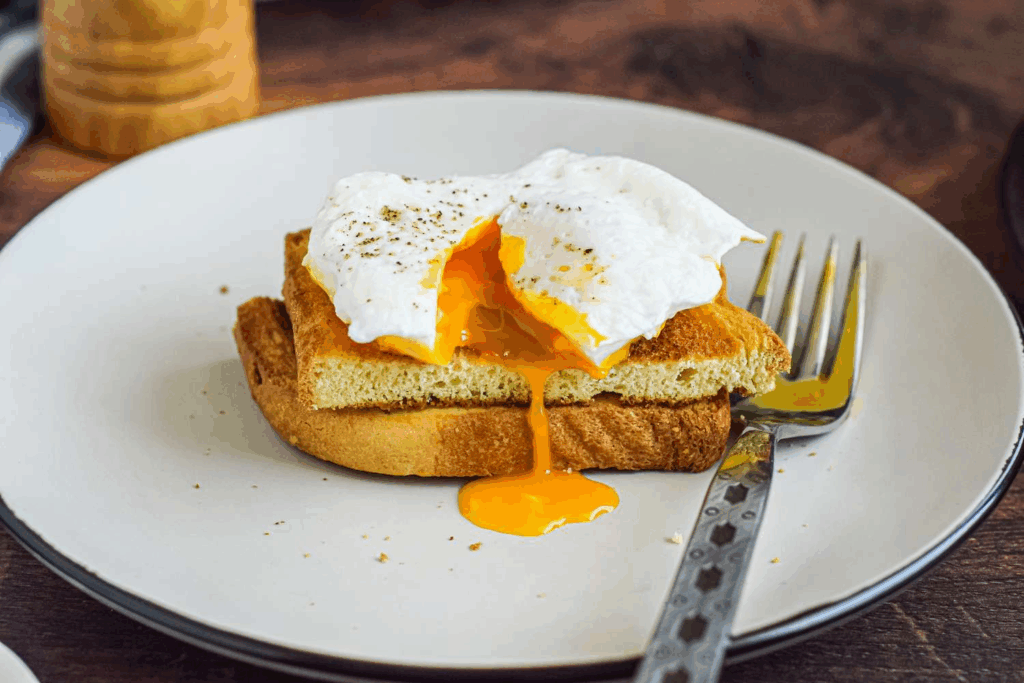
I’ll never forget the first time I made a truly good poached egg. I was in my early twenties, and before that, it was a string of dismal, wispy failures. I’d end up with a pot full of ghostly egg white tendrils and a sad, hard-boiled yolk bobbing alone in the middle. It felt like a magic trick I wasn’t in on. Then my friend Sarah, a brunch-line cook with tired feet and a golden heart, showed me her no-fuss method. No swirling vortex, no vinegar in the water. Just a little trick with a bowl. It changed everything. This is that method. It’s my weekday savior and my Sunday luxury, all in one.
Quick Look
| Prep | Cook | Total | Feeds | Level |
|---|---|---|---|---|
| 2 mins | 4 mins | 6 mins | 1 | Easy |
Why You’ll Love This Recipe
- It feels fancy but is secretly simple. Master this, and you’ve mastered a classic.
- The ultimate clean-out-the-fridge meal. Got wilted herbs? A nub of cheese? Lonely avocado? This is their purpose.
- It’s all about that perfect, runny yolk. The best sauce in the world comes free with the egg.
Grab These
- 1 large, very fresh egg (This is non-negotiable for a tight, pretty poach. I get mine from the farmer’s market.)
- 1 thick slice of your favorite bread (Sourdough is my champion here.)
- Butter, for toast
- Flaky sea salt (like Maldon) and freshly cracked black pepper
- Optional, but encouraged: A smear of ricotta or mashed avocado, a handful of arugula, a sprinkle of everything bagel seasoning, or a few slices of sharp cheddar.
Let’s Make It
First, get your bread toasting. You want it ready and waiting for that egg, because timing is everything here.
Now, for the main event. Fill a small saucepan about two-thirds full with water and bring it to a bare simmer. You’re looking for tiny bubbles on the bottom of the pot, not a roaring boil. While that’s heating, crack your egg into a small fine-mesh strainer set over a cup. Swirl it gently for just a second—this is the secret! You’re draining off the loosest, wispy part of the white that causes all those messy threads.
Gently slide the strained egg from the strainer into a small ramekin or cup. When your water is ready, use a spoon to create a gentle whirlpool in the center. In one confident motion, lower the ramekin to the water’s surface and let the egg slide in. The whirlpool will help it wrap around itself. Walk away. Seriously. Set a timer for 3 minutes and don’t touch it.
When the timer goes off, lift the egg out with a slotted spoon. Let it drain for a second over the pot. It should look like a little, soft cloud. Give it a gentle poke with your finger—the white should be set, but the yolk will feel soft and jiggly underneath. That’s perfection. Place it immediately on your waiting, buttered toast.
Nutritional Facts (Per Serving)
| Nutrient | Amount |
|---|---|
| Calories | ~ 250 kcal |
| Protein | 14g |
| Carbohydrates | 22g |
| Fat | 12g |
| Fiber | 3g |
| Sugar | 3g |
| Note: Values are estimates and will vary with toppings. |
Variations & Add-Ins
- The Green Goddess: Smash avocado on the toast, top with the egg, and a huge handful of fresh, peppery arugula.
- The Italian Job: A smear of good ricotta, the poached egg, a drizzle of chili oil, and a tear of fresh basil.
- The Everything Spice: Butter the toast, sprinkle heavily with everything bagel seasoning, then add your egg.
Serving Ideas
This is the meal, darling. But I love it with a simple side of cherry tomatoes I’ve halved and tossed with a pinch of salt. Or, if I’m feeling particularly decadent, a couple of slices of the best bacon I can find, baked until crisp in the oven.
Storage & Reheating
Poached eggs are best enjoyed immediately. I don’t recommend storing them. The good news is, they only take 3 minutes to make fresh!
My Two Cents
The strainer is the key. I’m telling you, it feels like a tiny, unnecessary step, but it’s the difference between a frumpy poach and a professional-looking one. It removes the runny part of the white that would otherwise feather out in the water. Don’t skip it.
You Asked, I’m Answering
- “Do I really need the vinegar?” Nope! Not with the straining method. I find vinegar can make the whites taste a little sour and gives them a weird, matte texture. Straining is the cleaner, better way.
- “My yolk broke! What now?” Oh, honey, I’ve been there. First, don’t panic. You now have a slightly different, but still delicious, soft-boiled-style egg on your toast. It’s not a failure, it’s a variation. Eat it with pride.