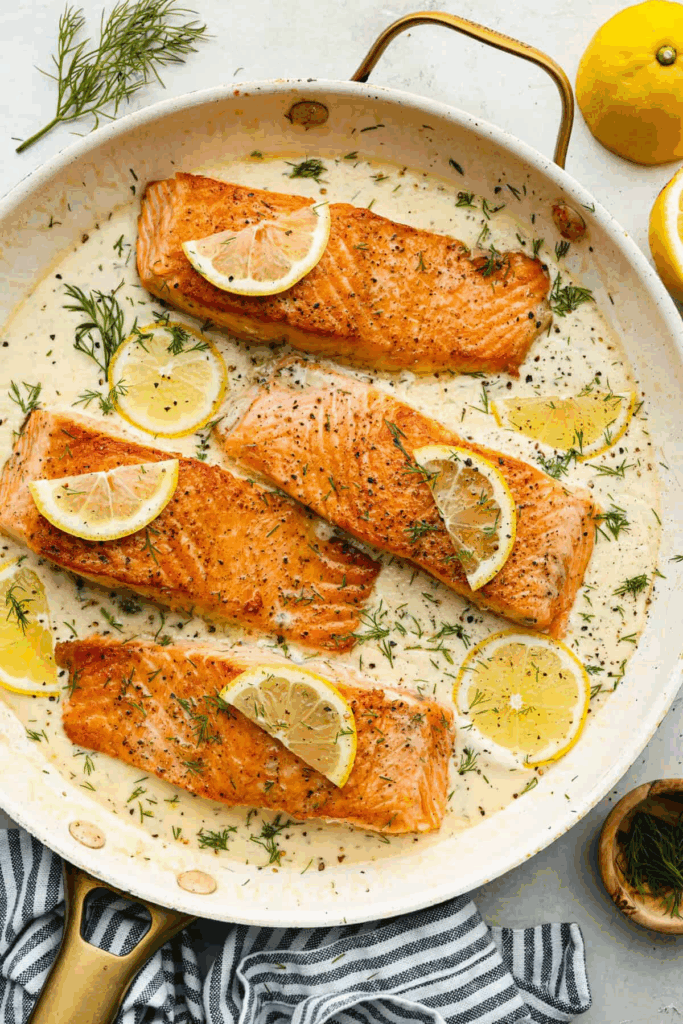
I’ll never forget the first time I made this for my now-husband, back in our tiny apartment with a stove that had exactly one reliable burner. I was so nervous, convinced I’d overcook the salmon into a chalky tragedy. But when that creamy, herby sauce hit the pan and let out that happy little sizzle, filling the whole place with a smell that felt both fancy and like home… I knew I had him. This recipe is that for me. A little bit of elegance that’s deceptively, wonderfully simple.
Quick Look
| Prep | Cook | Total | Feeds | Level |
|---|---|---|---|---|
| 10 mins | 15 mins | 25 mins | 2-3 | Easy |
Why You’ll Love This Recipe
- That restaurant-quality feeling, without the stress or the bill.
- The sauce. Oh, the sauce. It’s tangy, herby, and clings to the salmon in the most glorious way.
- It’s a one-pan wonder, meaning you can have a gorgeous meal without facing a mountain of dishes afterward.
- It’s endlessly adaptable. Don’t have dill? See my notes below.
Grab These
- For the Salmon:
- 2 (6-ounce) salmon fillets, skin-on or off (I prefer skin-on for that crispy sear)
- 1 tablespoon olive oil
- Salt and freshly cracked black pepper (Don’t you dare use the pre-ground dust!)
- For That Dill Cream Sauce:
- 1 tablespoon butter
- 2 cloves garlic, minced (or about 1 heaping teaspoon from a jar, I won’t tell)
- ½ cup chicken or vegetable broth
- ½ cup heavy cream (please, no substitutions here. Half-and-half will just weep and thin out.)
- 2 tablespoons fresh lemon juice (about half a lemon)
- 2 tablespoons freshly chopped dill, plus more for garnish
- Salt and pepper to taste
Let’s Make It
Alright, let’s get cooking. First, pat those salmon fillets completely dry with a paper towel. This is non-negotiable, friends. If you want a gorgeous, crispy sear and not a sad, steamed piece of fish, you gotta get it dry. Season them generously on both sides with salt and pepper.
Now, heat your olive oil in a large skillet (stainless steel or cast iron are my heroes here) over medium-high heat. Wait until the oil is shimmering—you should see it moving easily in the pan. Gently lay the salmon in the pan, presentation-side down (that’s the side that didn’t have the skin). Now, the hard part: don’t touch it. Don’t poke it. Don’t even think about moving it for a solid 4-5 minutes. You’re waiting for that beautiful golden crust to form.
Once it’s seared and releases easily from the pan, flip it and cook for another 2-4 minutes, depending on thickness. I like mine just slightly pink in the center. Carefully remove the salmon to a plate and tent it with foil. It’ll keep cooking a teeny bit, which is perfect.
Without wiping out the pan, reduce the heat to medium. Melt your butter, then add the garlic. Cook it for just 30 seconds until it’s fragrant—you’ll smell it! Don’t let it brown, or it’ll turn bitter. Pour in the broth to deglaze the pan, scraping up all those lovely browned bits from the salmon with your spatula. Those bits are pure flavor gold.
Let the broth simmer for about 2 minutes until it reduces by half. Stir in the heavy cream, lemon juice, and dill. Let it bubble gently for 2-3 minutes until it thickens enough to coat the back of a spoon. Taste it! This is crucial. Season with salt and pepper until it sings. Slide the salmon and any accumulated juices back into the pan, spooning that glorious sauce all over it. Heat for just one minute to warm through.
Nutritional Facts (Per Serving)
| Nutrient | Amount |
|---|---|
| Calories | ~ 480 kcal |
| Protein | 36g |
| Carbohydrates | 4g |
| Fat | 36g |
| Fiber | 0g |
| Sugar | 2g |
| Note: Values are estimates |
Variations & Add-Ins
- Lemon Zest: Stir in a teaspoon of lemon zest with the dill for an extra bright punch.
- Caper Twist: Fold in a tablespoon of chopped capers at the end for a briny, salty kick.
- Dill Disaster? No fresh dill? Use 2 teaspoons of dried tarragon instead. It’s a completely different vibe, but just as lovely.
Serving Ideas
- My absolute favorite is over a pile of creamy mashed potatoes or buttery orzo. The sauce soaks in and it’s just heaven.
- For a lighter meal, it’s perfect with simple roasted asparagus or a crisp arugula salad.
- Don’t forget a thick slice of crusty bread to do what my dad calls “plate cleaning.” You’ll want every last drop.
Storage & Reheating
This is best eaten fresh, but you can store leftovers in an airtight container in the fridge for up to 2 days. Reheat gently in a skillet over low heat with a tiny splash of broth or cream to loosen the sauce. The microwave will work in a pinch, but it might make the sauce a bit grainy.