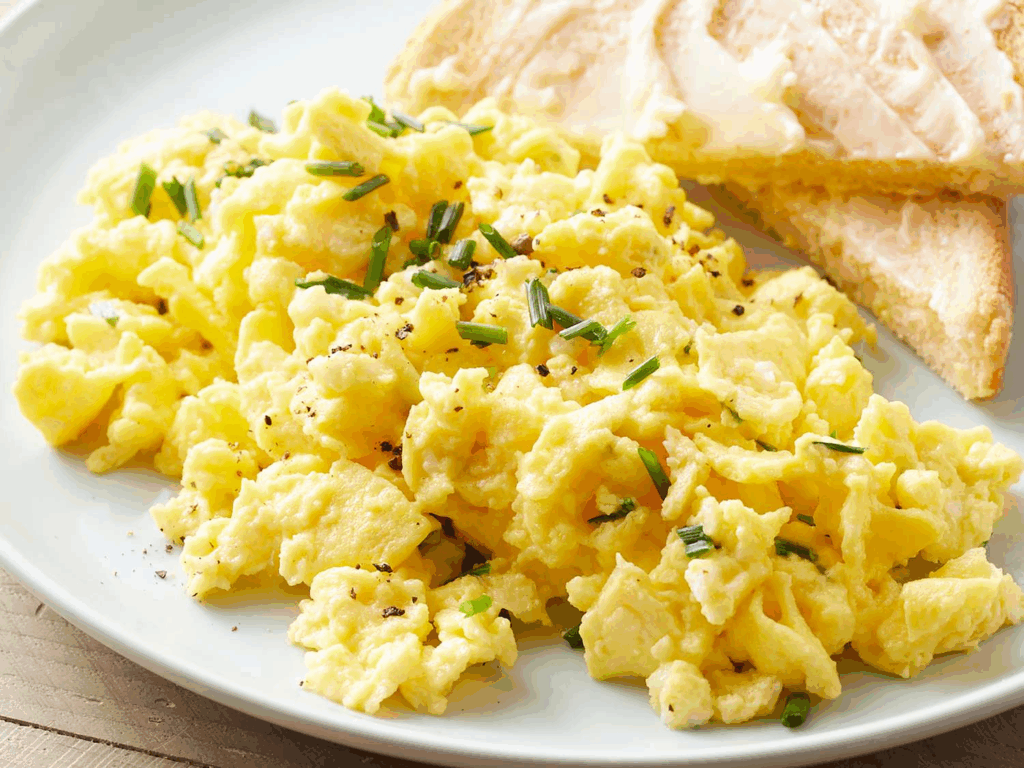
My dad was the scrambled egg master in our house. He’d stand at the stove, whisk in one hand and a cast-iron skillet in the other, and perform what I thought was pure magic. No milk, no water, just eggs and a patience I didn’t understand as a kid. He’d slide them onto my toast, and they were these soft, billowy, bright yellow clouds. It took me years and a truly tragic, rubbery failure of my own to realize his secret wasn’t a secret at all. It was just… slowness. And a whole lot of butter.
Quick Look
| Prep | Cook | Total | Feeds | Level |
|---|---|---|---|---|
| 2 mins | 10 mins | 12 mins | 1-2 | Easy |
Why You’ll Love This Recipe
- It uses one bowl and one pan (my kind of cleanup).
- The texture is a dream—creamy, soft, and nothing like those dry pucks at a bad hotel buffet.
- It teaches you a fundamental technique that makes everything else better.
- It’s the ultimate blank canvas for whatever you have in your fridge.
Grab These
- 3 large, cold eggs (trust me on the cold part)
- 1 tablespoon of cold, unsalted butter, cubed (plus a little more for the pan)
- A tiny pinch of salt (I use Diamond Crystal kosher salt—it’s less salty by volume)
- Freshly cracked black pepper
- (Optional, but highly encouraged) 1 tablespoon of full-fat crème fraîche or heavy cream
Let’s Make It
Crack your cold eggs right into a cold, non-stick or well-seasoned carbon steel pan. Don’t whisk them yet. Just plop them in. Now, add your tablespoon of cold, cubed butter and that tiny pinch of salt right on top.
This is where the magic starts. Turn the heat on to low. Yes, low. We are not in a hurry. Grab a flexible spatula and start stirring almost constantly. You’re not making an omelette, so you don’t need to let anything set. Just keep the eggs moving, scraping the bottom and sides as the butter melts and the eggs slowly, slowly begin to cook.
You’ll see the eggs start to thicken into a custardy, curded consistency. This is the moment of truth. The second you see no more liquid egg sloshing around, but the curds are still wet and shiny, take the pan right off the heat. They will keep cooking from the residual heat of the pan—this is the most common mistake people make!
If you’re using the crème fraîche, now’s the time to stir it in. It stops the cooking and adds an incredible, luxurious richness. Give it one final stir, grind some black pepper over the top, and serve immediately. I’m talking straight from the pan to the plate.
Nutritional Facts (Per Serving)
| Nutrient | Amount |
|---|---|
| Calories | ~ 280 kcal |
| Protein | 18g |
| Carbohydrates | 1g |
| Fat | 23g |
| Fiber | 0g |
| Sugar | 1g |
| Note: Values are estimates |
Variations & Add-Ins
- The “Everything but the Kitchen Sink”: In the last minute of cooking, stir in a handful of shredded sharp cheddar, some finely chopped chives, and a spoonful of crispy, crumbled bacon.
- French-Style Herbs: Fold in a teaspoon of fresh, finely chopped tarragon and parsley along with the crème fraîche. It’s a game-changer.
- Creamy Goat Cheese: Crumble in an ounce of soft goat cheese right at the end. It gets a little melty, a little tangy… perfection.
Serving Ideas
- Piled high on a thick slice of sourdough toast that’s been slathered with good butter.
- Alongside buttery, sautéed mushrooms and a simple tomato salad.
- My favorite lazy dinner: these eggs, a piece of toast, and a glass of white wine. Don’t judge me.
Storage & Reheating
Honestly, scrambled eggs are a right-now food. They don’t store or reheat well, as they tend to get watery and rubbery. Make them fresh and eat them all. You won’t regret it.
My Two Cents
The single most important thing you can do for creamy scrambled eggs is to start with a cold pan and low heat. Rushing them over high heat is what gives you those tough, dry curds. Low and slow wins the race, every single time.
You Asked, I’m Answering
- “Do I really need to use cold eggs?” Yes. I’ve tested this side-by-side. Cold eggs straight from the fridge give you more control over the cooking process and help prevent overcooking. Room temp eggs cook too fast and can get tough.
- “Why crème fraîche and not milk?” Milk can make the eggs watery. Crème fraîche (or heavy cream) is rich, thick, and stabilizes the eggs, giving them a creamier texture and a more luxurious flavor without making them wet.