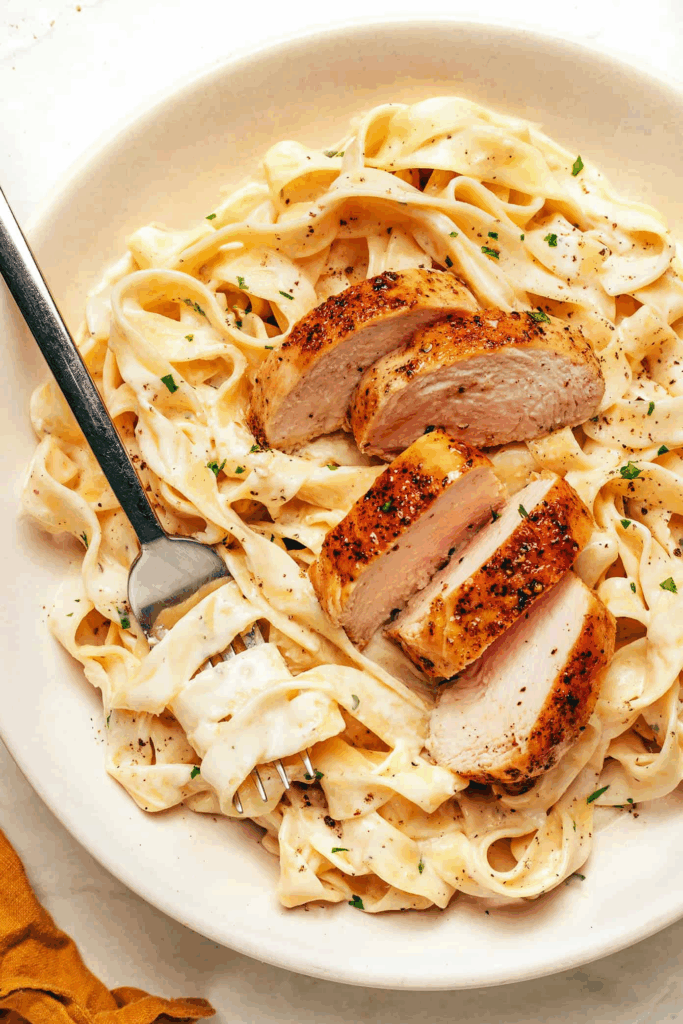
My husband proposed to me over a plate of Fettuccine Alfredo. Not in a fancy restaurant, but in my tiny apartment kitchen, after I’d attempted to impress him with my “signature” dish. I’d used a jarred sauce (I know, the horror!) and it was a gloopy, salty mess. He ate every bite, looked me dead in the eye, and said, “I love you. Now, promise me you’ll learn how to make this properly.” The real version, it turns out, is so much simpler and more profound. It’s not a heavy, flour-thickened sauce. It’s a delicate, elegant emulsion of butter, cheese, and starchy pasta water. This is the recipe I perfected after that night. Consider it my vow.
Quick Look
| Prep | Cook | Total | Feeds | Level |
|---|---|---|---|---|
| 5 mins | 15 mins | 20 mins | 2-3 people | Easy |
Why You’ll Love This Recipe
- It uses only 3 core ingredients (plus pasta, salt, and water).
- It’s lighter and more sophisticated than the heavy, cream-laden versions.
- The whole process is a lesson in the magic of pasta technique.
- It’s pure, unadulterated comfort in a bowl.
Grab These
- 9 oz (250g) fresh fettuccine (or a good-quality dried fettuccine)
- 6 tablespoons (85g) high-quality, unsalted European-style butter, cold and cut into tablespoons (Kerrygold is my go-to)
- 1 cup (about 100g) freshly grated Parmigiano-Reggiano cheese
- Fine sea salt, for the pasta water
- Freshly cracked white or black pepper (optional)
Let’s Make It
First things first: grate your cheese. Do not, I beg of you, use the pre-grated stuff. It’s coated in anti-caking agents that will prevent it from melting into a silky sauce. You want a fine, fluffy snow of real Parmigiano-Reggiano. This is the most important step.
Get your pasta cooking in a large pot of very well-salted water. It should taste like the sea. If you’re using fresh pasta, it will only take 2-3 minutes. While it cooks, take a liquid measuring cup and scoop out about a cup of the starchy pasta water before you drain it. This is our secret weapon.
Here’s where the magic happens. Once the pasta is al dente, drain it, but don’t shake it completely dry. Leave a little water clinging to it. Immediately return the hot pasta to the still-hot pot (off the heat). Now, add your cold butter, one tablespoon at a time, tossing constantly with tongs. You’ll see it start to melt and create a creamy, pale sauce. This is an emulsion forming.
Once the butter is incorporated, start adding your mountain of grated cheese in a few additions, again tossing constantly. The sauce will seem thick and cling to the pasta. Now, start adding your reserved pasta water, a splash at a time, while tossing. Keep going until the sauce loosens, becomes glossy, and coats the back of a spoon. It should flow, not sit in a glob.
You’re done. Season with a tiny pinch of salt (the cheese is salty, so taste first!) and a crack of pepper if you like. Serve it immediately in warm bowls. It waits for no one.
Nutritional Facts (Per Serving)
| Nutrient | Amount |
|---|---|
| Calories | ~ 620 kcal |
| Protein | 24g |
| Carbohydrates | 55g |
| Fat | 34g |
| Fiber | 2g |
| Sugar | 2g |
| Note: Values are estimates |
Variations & Add-Ins
- Creamy (But Not Traditional): For a richer, more American-style sauce, stir in ¼ cup of heavy cream or half-and-half after the butter has melted.
- Chicken Alfredo: Add sliced, grilled chicken breast on top for a complete meal.
- Garlic Lover’s Twist: Gently melt the butter with two smashed garlic cloves first, then remove the garlic before starting the sauce.
Serving Ideas
- This is a rich pasta, so I love it with a simple, crisp salad with a sharp vinaigrette to cut through the fat.
- Serve with a glass of buttery Chardonnay. Perfection.
Storage & Reheating
Like carbonara, this is best fresh. The sauce can separate upon reheating. If you have leftovers, the best method is to reheat them very gently in a skillet with a splash of milk or cream, stirring constantly.
My Two Cents (Pro-Tip)
Cold butter and a hot pot are the keys. Adding cold butter to the hot pasta helps create the emulsion slowly, giving you control and preventing a greasy, broken sauce. Don’t let anyone tell you to melt the butter first.
You Asked, I’m Answering (FAQ)
- “Can I use dried pasta instead of fresh?” You can, but fresh pasta has a more porous texture that really soaks up the sauce. If using dried, just be sure to reserve plenty of that starchy water to help build the sauce.
- “My sauce is greasy/oily. What happened?” The emulsion broke. This usually happens if the heat was too high or you added the butter too quickly. The pan should be off the heat when you start building the sauce. Low and slow wins the race.