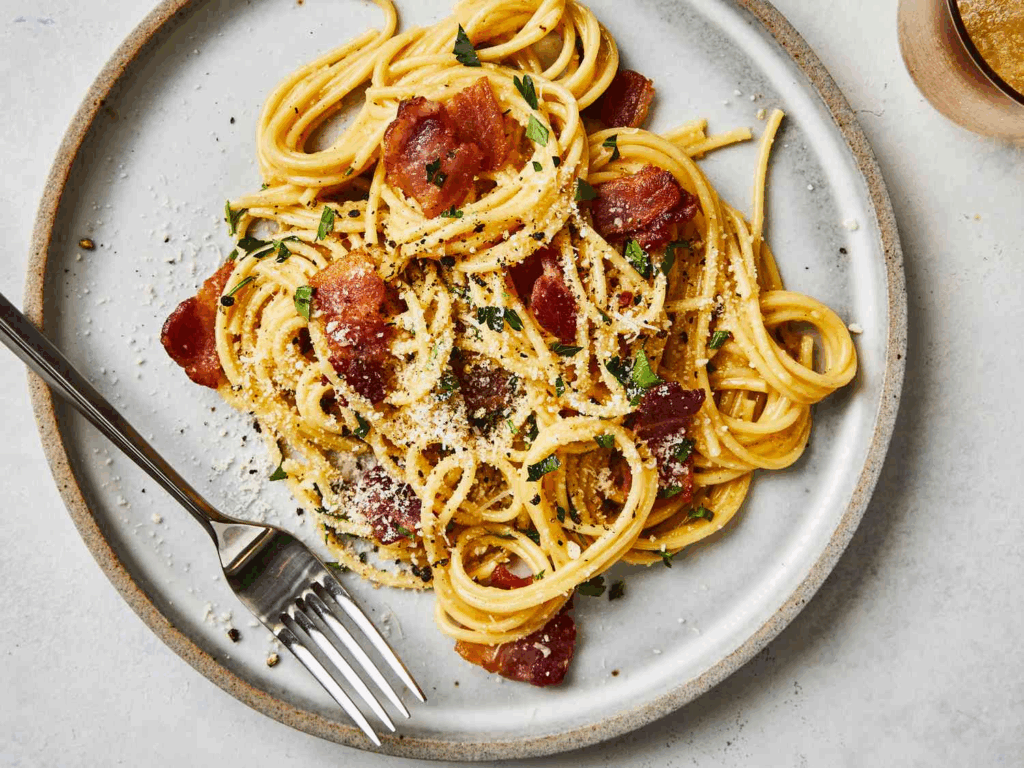
I’ll never forget the first time I had real carbonara. I was nineteen, backpacking through Rome, and convinced the version I made in my college dorm—you know, the one with heavy cream and peas—was the real deal. I ordered it in this tiny, steamy trattoria tucked away from the tourists, and when the plate arrived, a simple, golden tangle of pasta, I was confused. Where was the pool of cream? The flecks of green? I took a bite. And my entire culinary world tilted on its axis. It was rich, yes, but sharp and salty, with a peppery heat that built with every forkful. It was magic. I’ve been chasing that perfect, simple alchemy ever since, and friends, this is it. This is the one.
Quick Look
| Prep | Cook | Total | Feeds | Level |
|---|---|---|---|---|
| 10 mins | 15 mins | 25 mins | 4 people | Medium |
Why You’ll Love This Recipe
- It’s deceptively simple with just a handful of ingredients.
- Comes together in less time than it takes to watch an episode of your favorite sitcom.
- Feels incredibly luxurious without any cream.
- It’s the ultimate “I’m a kitchen wizard” dish when you get it right.
Grab These
- 1 lb (450g) high-quality spaghetti (I’m loyal to De Cecco for this)
- 6 ounces (170g) guanciale, diced (pancetta works in a pinch, but guanciale is the dream)
- 3 large eggs, at room temperature (this is non-negotiable!)
- 1 cup (about 100g) freshly, finely grated Pecorino Romano cheese (plus more for serving)
- 1 whole egg + 2 egg yolks
- Lots of freshly cracked black pepper
- A good pinch of salt (go easy, the cheese and guanciale are salty)
Let’s Make It
Alright, let’s get our mise en place ready. This recipe moves fast at the end, so having everything prepped is your secret weapon. Dice your guanciale, grate your cheese, and crack your eggs into a medium bowl. To the eggs, add all that gorgeous Pecorino Romano and a generous amount—I’m talking generous—of black pepper. Whisk it all together until it’s a thick, uniform paste. This is your sauce base. Trust it.
Now, get your pasta cooking in a large pot of well-salted water. Cook it until it’s just one minute shy of al dente. It’s going to finish cooking in the pan, so we need it a little firm.
While the pasta bubbles away, let’s tackle the guanciale. Add it to a large, cold skillet (I use my trusty cast iron) and then turn the heat to medium. We’re going to render the fat out slowly, so it becomes crispy and golden, not burnt. This takes about 10 minutes. Be patient! The rendered fat is liquid gold. Once it’s crisp, turn the heat off. Don’t drain anything.
This is the scary part that makes everyone sweat. You’ve got this. Using tongs, transfer your almost-al-dente pasta directly from the pot into the skillet with the guanciale and its glorious fat. Don’t drain it in a colander! We need that starchy pasta water. Toss, toss, toss the pasta, coating every strand in the fat.
Now, take the skillet off the heat entirely. Let it cool for just a minute. If the pan is too hot, you’ll get scrambled eggs. We don’t want that. We want silky sauce. Slowly, while whisking constantly, drizzle about ¼ cup of the hot pasta water into your egg and cheese mixture. This tempers the eggs. Then, pour the tempered egg mixture over the pasta, working quickly and tossing constantly. The residual heat will cook the eggs into a creamy, dreamy sauce. If it seems too thick, add another splash of pasta water until it’s loose and glistening.
Serve immediately. Right now. In warm bowls, with another crack of pepper and a final snowstorm of Pecorino.
Nutritional Facts (Per Serving)
| Nutrient | Amount |
|---|---|
| Calories | ~ 580 kcal |
| Protein | 25g |
| Carbohydrates | 65g |
| Fat | 22g |
| Fiber | 3g |
| Sugar | 3g |
| Note: Values are estimates |
Variations & Add-Ins
- The Classicist’s Swap: Can’t find guanciale? A good, thick-cut pancetta is a perfectly delicious substitute.
- Green Goddess: For a bit of green, stir in a handful of fresh parsley or peas right at the end. (My Nonna would side-eye me, but it’s good!)
- Garlic Lover: Add a smashed garlic clove to the pan while rendering the guanciale, and remove it before adding the pasta.
Serving Ideas
- Serve it in warmed bowls with a simple arugula salad dressed with lemon juice and olive oil on the side. The bitterness cuts the richness perfectly.
- All you really need is a fork and a glass of crisp, dry white wine. Maybe two glasses.
Storage & Reheating
Honestly, this is best eaten immediately. The sauce can break and become greasy when reheated. If you must save leftovers, gently reheat them in a skillet over very low heat with a splash of water, stirring constantly. Don’t you dare use a microwave.
My Two Cents (Pro-Tip)
The cardinal rule: NO CREAM. I know, I know. But the magic of carbonara is the emulsion of egg, cheese, starchy water, and fat. Cream cheats you out of that delicate, perfect texture. Be brave. Skip it.
You Asked, I’m Answering (FAQ)
- “My sauce turned into scrambled eggs! What did I do wrong?” You rushed it. The pan was too hot when you added the egg mixture. Always, always take the skillet off the heat and let it cool for a minute. Tempering the eggs with a little pasta water first is your insurance policy.
- “Pecorino Romano is too salty/sharp for me. Can I use Parmesan?” Absolutely. A 50/50 blend of Pecorino and Parmigiano-Reggiano is a beautiful, slightly milder compromise. It’s how my kids prefer it.