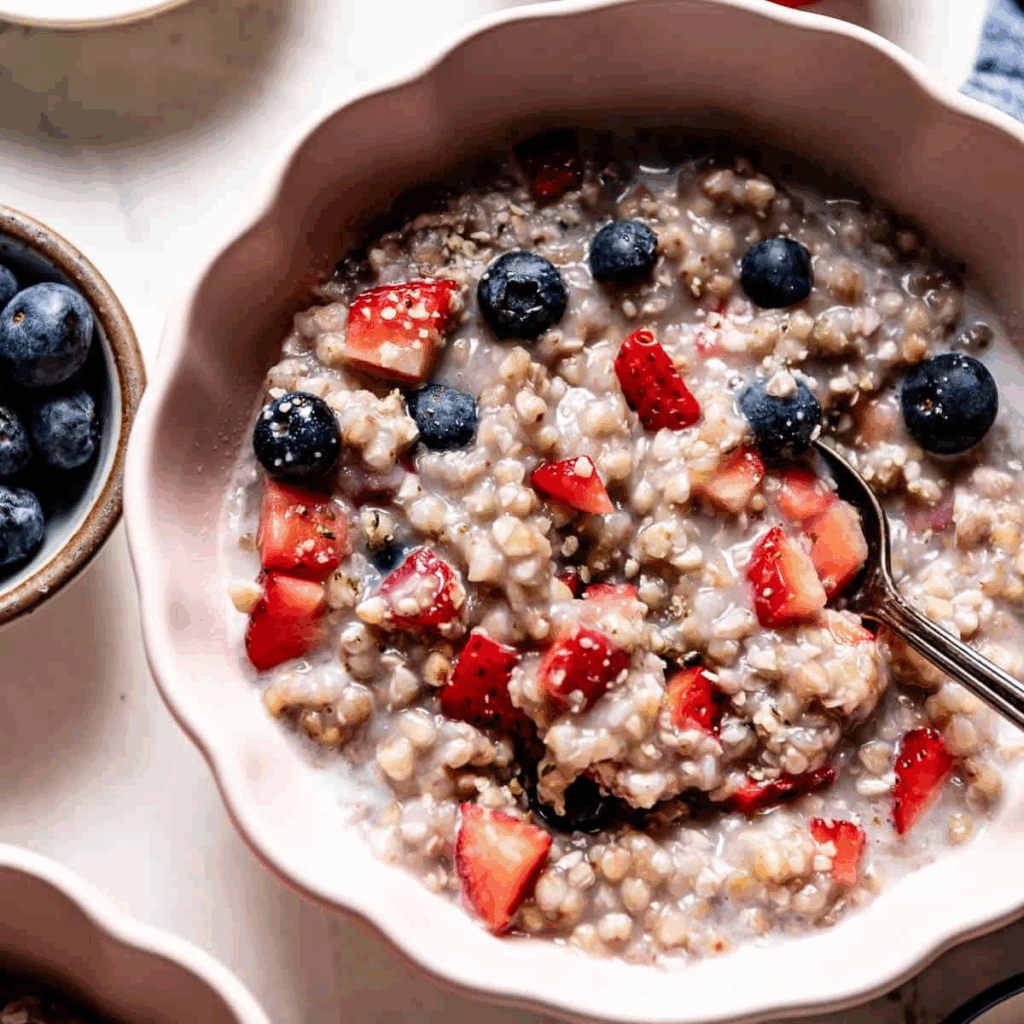
There’s a certain kind of quiet, drizzly morning that calls for something more than toast, but less fussy than eggs. Something that simmers patiently on the stove while you sip your first coffee, slowly waking up the house with its warm, comforting scent. For me, that something is buckwheat porridge. Now, I know what you’re thinking. “Buckwheat again, Clara? And porridge? That sounds… healthy.” And it is! But hear me out. This isn’t the buckwheat of my pancake recipe. This is whole, raw buckwheat groats, toasted and then simmered into a breakfast that is the lovechild of creamy rice pudding and nutty oatmeal. It’s my go-to when I need deep, lasting comfort and energy. It’s the breakfast equivalent of your favorite, well-worn sweater.
Quick Look
| Prep | Cook | Total | Feeds | Level |
|---|---|---|---|---|
| 5 mins | 25 mins | 30 mins | 2 | Easy |
Why You’ll Love This Recipe
- It’s incredibly versatile—enjoy it sweet like oatmeal or savory like congee.
- It has a low glycemic index, providing steady energy without a mid-morning crash.
- The process of toasting the groats is simple but transformative, unlocking a deep, nutty flavor.
- It’s naturally gluten-free and can be made vegan with one simple swap.
Grab These
- 1 cup raw buckwheat groats
- 2 cups water or milk of choice (I use half water, half whole milk for ultimate creaminess)
- A big pinch of salt
- For the Sweet Version (my weekday default):
- Maple syrup or honey, to taste
- A pat of butter
- A splash of cream or milk
- Fresh or frozen berries
- For the Savory Version (my weekend treat):
- A soft-boiled or fried egg
- A drizzle of soy sauce or tamari
- Sliced green onions
- A sprinkle of toasted sesame seeds
- A dash of chili crisp or hot sauce
Let’s Make It
This starts with one crucial step: toasting the buckwheat groats. Please, please don’t skip this. It’s what takes them from bland and slightly bitter to nutty, fragrant, and deeply flavorful. Grab a medium saucepan with a good bottom (the one you’ll use for the whole recipe is fine) and place it over medium heat. Add the raw buckwheat groats and toast them, stirring frequently, for 3-5 minutes. You’ll know they’re ready when they become fragrant and turn a shade darker. A few might even pop! It’s a wonderful sound.
Once they’re nicely toasted, carefully add your liquid—water, milk, or a combination—and that essential pinch of salt. It will sizzle and steam dramatically, which is all part of the fun. Give it a good stir, scraping up any bits from the bottom of the pan.
Bring the whole thing to a boil, then immediately reduce the heat to the lowest possible setting. Cover the pot with a tight-fitting lid and let it simmer gently for 15-20 minutes. Do not lift the lid. We need that steam to work its magic. Just walk away. Set a timer. Trust the process.
After 20 minutes, take a peek. The liquid should be absorbed, and the groats will be tender but still have a delightful, slight chew—think al dente pasta or the texture of steel-cut oats. If there’s still a lot of liquid, let it cook uncovered for another few minutes. If it looks perfect, turn off the heat, put the lid back on, and let it sit for 5 minutes. This rest period is like a mini spa treatment for the grains, allowing them to plump up and become perfectly tender.
Now, fluff it with a fork. For a sweet breakfast, dish it into bowls and top with your butter, a drizzle of maple syrup, a splash of cream, and some berries. For a savory spin, top with that glorious runny-yolked egg, green onions, sesame seeds, and a generous dash of soy sauce and hot sauce.
Nutritional Facts (Per Serving – basic porridge)
| Nutrient | Amount |
|---|---|
| Calories | ~ 290 kcal |
| Protein | 11g |
| Carbohydrates | 61g |
| Fat | 3g |
| Fiber | 8g |
| Sugar | 2g |
| Note: Values are estimates and will vary with toppings and liquid used. |
Variations & Add-Ins
- “Apple Pie” Porridge: Stir in ½ cup of unsweetened applesauce and a teaspoon of apple pie spice into the cooked porridge.
- “Coconut Curry” Savory: Cook the groats in light coconut milk. Top with fresh cilantro, a squeeze of lime, and a spoonful of mango chutney.
- “Pumpkin Spice:** Stir in ¼ cup of pumpkin puree and a teaspoon of pumpkin pie spice along with the liquid before cooking.
Serving Ideas
I live for the contrast of the savory version with a crispy-edged fried egg on top. The way the yolk mixes into the porridge is pure bliss. On the sweet side, I love serving it with a side of warm, roasted pears or apples. A cup of strong, black English Breakfast tea is the perfect companion for either version.
Storage & Reheating
Store any leftover plain porridge in an airtight container in the fridge for up to 5 days. It thickens up considerably as it cools. To reheat, add a splash of water or milk to a saucepan with the porridge and warm it over medium heat, stirring frequently, until it’s hot and has loosened up to your desired consistency.
My Two Cents
The line between perfectly cooked buckwheat porridge and a slightly mushy one is thin. The key is the rest period after cooking. Even if it looks a tiny bit wet, take it off the heat and let it sit, lid on, for that full 5 minutes. It will continue to absorb the liquid and won’t be mushy. I learned this the hard way after a few batches of… let’s call it “buckwheat paste.”
You Asked, I’m Answering
- “What’s the difference between buckwheat groats and kasha?” Great question! Kasha is just buckwheat groats that have already been toasted. So if you buy kasha, you can skip the toasting step in the recipe and go straight to simmering.
- “My porridge is too thick! What do I do?” Easy fix! Just stir in a little more hot water or milk until it reaches your preferred consistency. It’s very forgiving.
- “Can I make this in a rice cooker?” You bet. Toast the groats in a dry skillet first (most rice cooker pots aren’t meant for stovetop toasting), then add them to the rice cooker with the liquid and salt and use the “porridge” or “white rice” setting.